A gutter system has one job: move water safely away from your home. Yet the right rain gutter options can affect far more than rainy-day convenience. In Des Moines, gutters must handle spring downpours, summer storms, falling leaves, freeze-thaw cycles, and snowmelt without allowing water to collect near the foundation, stain siding, or damage landscaping.
Choosing gutters is not simply a matter of picking a color. Material, size, shape, installation method, and downspout placement all determine how well the system protects your home. A coordinated approach helps ensure your roof, siding, gutters, and drainage work together through every Iowa season.
Rain Gutter Options Start With the Right Material
Most homeowners begin with aluminum gutters, and for good reason. Aluminum is lightweight, resistant to rust, available in many colors, and well suited to most residential rooflines. It provides dependable performance at a practical price point, particularly when installed as a seamless system that reduces joints and potential leak locations.
Aluminum does have limits. Thin, lower-grade material can bend under ladders, falling branches, or heavy ice. For a long-term installation, the thickness of the aluminum and the quality of the hanger system matter just as much as the color or profile.
Steel gutters offer greater strength and can be a strong choice for homeowners who want a more substantial system. Galvanized steel is durable, but its protective coating must remain intact to prevent rust over time. Painted steel can complement a premium exterior design, although it generally requires more attention than aluminum in a climate with frequent moisture and temperature changes.
Copper gutters bring a distinctive appearance and exceptional longevity when properly installed. They develop a natural patina rather than requiring painted finishes, making them a fit for historic homes or high-end architectural styles. Their cost is significantly higher, and the installation requires specialized workmanship. Copper is best viewed as a design and long-term value decision, not simply a drainage upgrade.
Vinyl gutters are often promoted as a budget-friendly option. They do not rust and can be easy to install in mild climates. In Iowa, however, vinyl can become brittle in cold conditions and may sag or crack as temperatures shift. For many local homes, aluminum or steel offers a more dependable return over the life of the system.
Seamless Gutters Reduce Weak Points
Traditional sectional gutters are assembled from pre-cut pieces. Every connection is another location that can eventually loosen, leak, or collect debris. They can work for simple repairs or temporary solutions, but they create more maintenance points across a long roofline.
Seamless gutters are formed on-site to match the measurements of your home. They still have joints at corners and downspouts, but the long straight runs have far fewer seams. That can reduce leak risk, create a cleaner appearance, and improve long-term performance.
For most Des Moines homeowners replacing an aging system, seamless aluminum gutters offer the most balanced combination of durability, appearance, and value. The right choice can change for unusually complex rooflines, historic properties, or homes where steel or copper better supports the desired exterior look.
Choose the Gutter Shape and Size for Your Roof
The familiar K-style gutter has a decorative front edge that resembles interior crown molding. It is widely used on residential homes because it carries a substantial volume of water while blending well with many exterior styles. K-style gutters are typically available in 5-inch and 6-inch widths.
Half-round gutters have a smooth, rounded shape and a more traditional appearance. They are common on older homes and properties with a classic architectural design. Because their open shape can carry less water at a comparable size, correct sizing and downspout layout are especially important.
A 5-inch gutter can be sufficient for a modest roof with straightforward drainage. A 6-inch system provides additional capacity, which is often valuable for larger homes, steep roofs, long runs, and areas where multiple roof planes direct water into one section. It is also a practical consideration for homes that experience overflow during intense storms.
Gutter size should never be selected by appearance alone. The roof’s drainage area, pitch, valleys, and local rainfall patterns all affect how much water reaches each run. A roof valley can send a concentrated stream into a small section of gutter, overwhelming a system that appears adequate everywhere else.
Downspouts Matter as Much as the Gutters
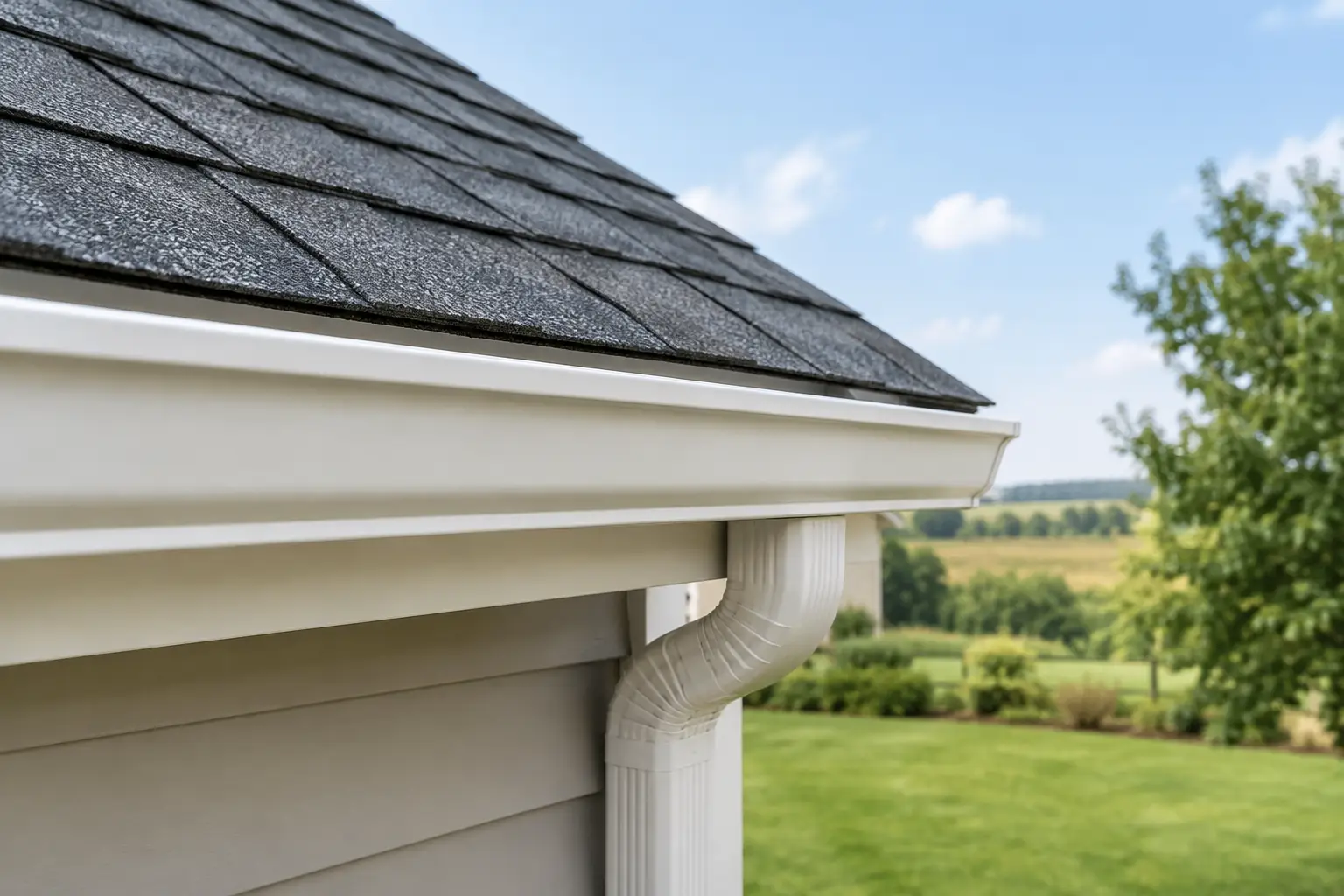
Gutters collect water, but downspouts do the work of getting it away from the house. An undersized or poorly placed downspout can cause water to back up and spill over, even if the gutter itself is in good condition.
Larger downspouts move more water and are often paired with 6-inch gutters. Placement should account for roof valleys, long gutter runs, walkways, driveways, landscaping, and the direction of the property’s grade. The goal is to discharge water well away from the foundation without creating a slippery path or washing out mulch and soil.
Extensions, splash blocks, and underground drainage connections can all help manage runoff. Each has trade-offs. Above-ground extensions are easy to inspect and maintain, while buried lines offer a cleaner look but need proper slope and occasional attention to prevent blockage. A contractor should evaluate where the water will ultimately go, not just where it leaves the downspout.
Are Gutter Guards Worth It?
Gutter guards can reduce the amount of leaves, seeds, and roof debris entering the system. They are especially helpful around mature trees, where seasonal cleanup can become a frequent chore. They can also make it easier for water to reach the gutter instead of pooling behind heavy debris.
No guard makes a gutter system completely maintenance-free. Fine material, roof grit, and windblown debris can still collect on top of or inside certain guard designs. Ice may also form regardless of the guard used, particularly where attic heat loss or roof conditions create uneven melting.
The best gutter guard depends on the type of debris around the home and the roof’s design. A quality guard should allow water to enter efficiently, fit securely beneath or along the roof edge, and avoid restricting flow during heavy rain. Guard installation should not interfere with roof materials or create a path for water to get behind the gutter.
Color and Curb Appeal Deserve Consideration
Gutters are functional, but they remain a visible part of the exterior. Many homeowners match gutter color to the trim for a clean, finished border around the roofline. Others select a color that matches siding so the system blends into the home.
A coordinated color selection becomes especially valuable when replacing a roof, siding, or windows at the same time. Viewing the exterior as one system helps avoid small mismatches that stand out once the work is complete. It also allows the installer to address flashing, fascia condition, and drainage details before a new gutter system is installed.
Installation Quality Protects the Investment
Even premium gutters will struggle if they are installed without the correct slope, support, or fastening. Gutters need a subtle pitch toward downspouts so water drains instead of standing in the channel. They also need secure hangers, properly sealed corners, and attachment points that account for the condition of the fascia board behind them.
Before replacement, look for signs that the current system is failing: recurring overflow, sagging sections, peeling paint, rust, loose fasteners, water marks on siding, soil erosion, or dampness near the foundation. These issues can point to more than worn-out gutters. They may reveal damaged fascia, roof-edge concerns, or a drainage design that was never sized for the home.
Guardian Roofing can help homeowners evaluate gutter choices as part of a complete exterior plan, whether the immediate need is better drainage or a larger roof replacement project. A clear assessment helps match the material, capacity, color, and installation details to the way your home handles Iowa weather.
The best time to address gutters is before the next hard rain shows where the water is going. A properly designed system quietly protects the parts of your home that are most expensive to repair.