
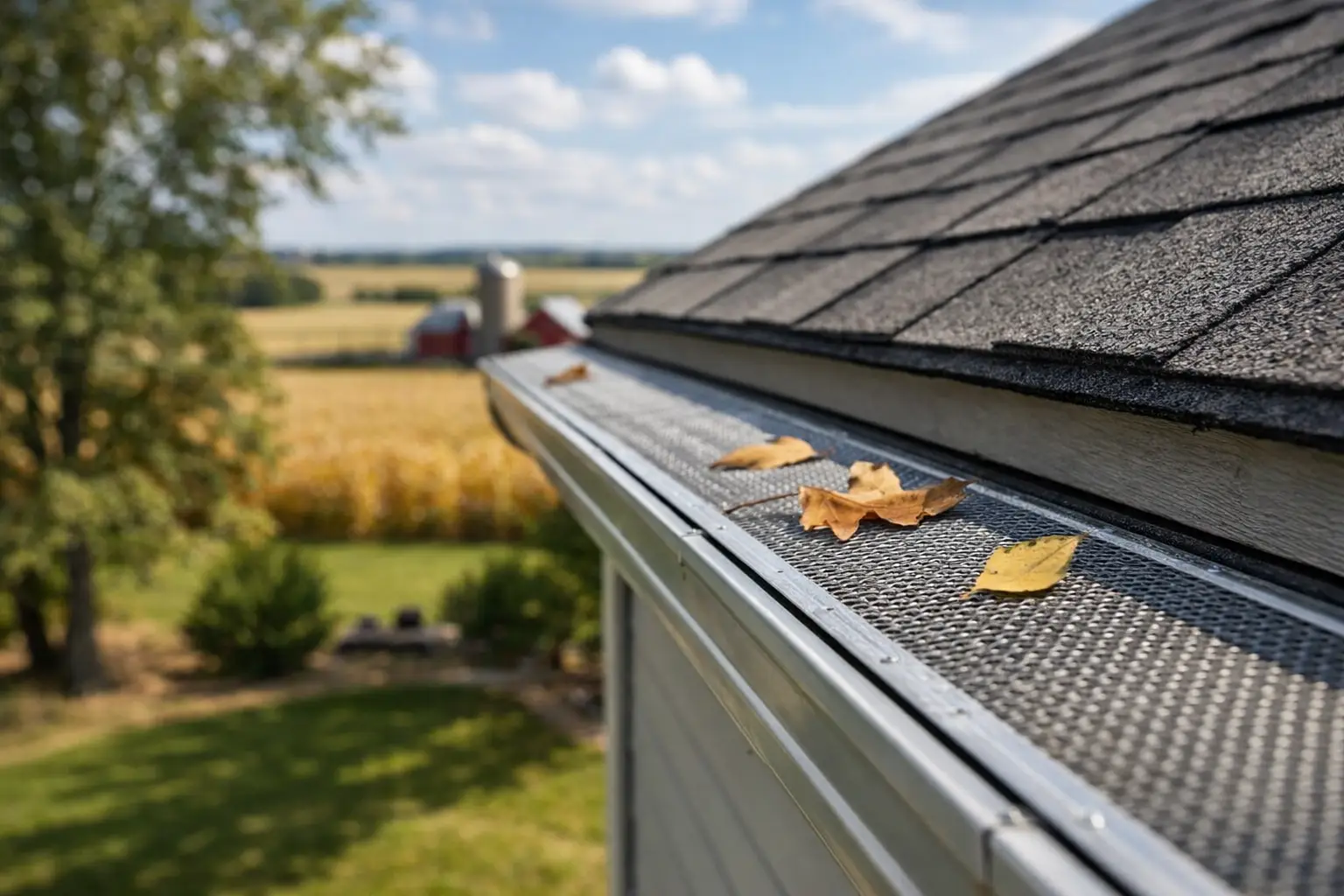
A gutter can look clear from the ground and still be one hard rain away from overflowing. Leaves, maple seeds, roof grit, and windblown debris collect in places homeowners cannot easily see. Gutter guards help keep that buildup out while allowing rainwater to move through the system as intended. For Des Moines homeowners, the right guard can reduce routine cleanup and help protect the roofline, siding, foundation, and landscaping from unwanted water.
They are not a cure-all, and no product makes gutters completely maintenance-free. The value of gutter guards comes down to the type of guard, the condition and pitch of the roof, nearby trees, and the quality of the installation. A properly matched system is a practical layer of protection for a home that faces Iowa rain, snow, wind, and seasonal debris.
What Gutter Guards Actually Do
Gutters have one essential job: collect water from the roof and direct it safely away from the home. When debris blocks that path, water can spill over the gutter edge, run behind the fascia, saturate the soil near the foundation, or freeze in the wrong places during cold weather.
Gutter guards create a barrier over or inside the gutter trough. They are designed to let water enter while limiting leaves, twigs, shingle granules, and other debris that can form a clog. The best result is not a gutter that never needs attention. It is a gutter system that stays cleaner, drains more consistently, and is easier to inspect and maintain.
That distinction matters. If gutters are loose, improperly sloped, undersized, or already full of old debris, adding a guard alone will not solve the underlying problem. The gutter system should be cleaned, secured, and evaluated before guards are installed.
Types of Gutter Guards for Iowa Homes
Not every gutter guard performs the same way. Material, design, and fit all affect how well a system handles the mix of rain, snow, and tree debris common across central Iowa.
Screen Guards
Screen guards are panels with holes large enough for water to pass through while catching larger leaves and sticks. They are generally a more budget-conscious option and can work well on homes with limited tree cover. However, small debris, seed pods, and roof granules may still enter through the openings or collect on top of the screen.
Mesh Guards
Fine mesh guards use smaller openings to block more types of debris. They are often a stronger option for homes surrounded by mature trees, especially where maple seeds, pine needles, and small leaf fragments are a recurring issue. Water flow can be excellent with a quality mesh product, but the surface still needs occasional brushing or rinsing if fine debris mats over it.
Reverse-Curve Guards
Reverse-curve designs use water tension to guide rain into the gutter while encouraging leaves to fall away. These guards can be effective under the right conditions, but they must be installed at the correct angle for the roof and gutter profile. In heavy downpours, performance can depend heavily on the design and the amount of water coming off the roof. This style of gutter guard can also be more prone to ice formation in the winter.
Foam and Brush Inserts
Foam and brush-style inserts sit inside the gutter rather than covering it. They may be simple to install, but they can trap fine debris within the gutter and may hold moisture over time. For homeowners seeking a long-lasting, low-maintenance exterior investment, these options often involve more trade-offs than professionally fitted surface guards.
The best choice depends on your home, not just a product label. A steep roof, a large roof area, oversized gutters, nearby trees, and local drainage conditions can all change which system makes sense.
Why Gutter Guards Matter in Des Moines
Iowa weather gives gutters very little downtime. Spring storms can bring fast, heavy rain. Summer wind can send leaves and branches across the roof. Fall brings the obvious leaf drop, while winter freeze-thaw cycles can turn standing water into ice along the roof edge and gutter line.
Gutter guards cannot prevent ice dams by themselves. Ice dams are usually connected to heat loss through the attic, snow on the roof, and freezing temperatures. Still, guards can help the gutter system start winter in better condition by reducing wet leaf buildup that holds water in the trough.
They can also lessen the need to climb a ladder several times a year. That is a meaningful benefit, particularly for homeowners with two-story homes, steep rooflines, or difficult landscaping below the eaves. Less frequent cleaning does not mean no cleaning, but it can make seasonal gutter care safer and more manageable.
When Gutter Guards Are Worth the Investment
Gutter guards are often worth considering when a home has recurring clogs, trees near the roof, or water overflow that has already affected the exterior. If you regularly find leaves packed at downspout openings, see staining on siding, or notice soil washing away near the foundation, improving gutter performance deserves attention.
They are also a sensible addition during a coordinated exterior project. When a roof is being replaced or gutters are being repaired, it is easier to evaluate the full water-management system at once. The roof edge, fascia, gutters, downspouts, and drainage path should work together. Addressing only one component can leave the next weak point waiting to cause trouble.
The investment may be less urgent for a home with very few nearby trees and easy access to a single-story gutter system. In that case, regular cleaning may remain the most cost-effective approach. Even then, homeowners should watch for shingle granules, windblown debris, and downspout blockages after major storms.
A guard system is most valuable when it solves a real maintenance or drainage problem. It should not be sold as an unnecessary add-on or as a promise that no future care will ever be needed.
Installation Quality Protects the Roofline
The installation matters as much as the guard itself. Guards should fit the existing gutter profile securely without creating gaps that collect debris or interfere with water flow. They also should not compromise the roof edge, damage shingles, or make future roof service more difficult.
Before installation, a professional should check that the gutters are securely fastened and pitched toward the downspouts. Downspouts should discharge water far enough from the foundation, and any existing leaks or separated joints should be addressed. A clean, properly functioning gutter is the starting point for a guard system that performs well.
For homes with aging gutters, replacement may be the better first step. Installing guards over bent, undersized, or failing gutters can protect a system that is already near the end of its useful life. A clear assessment helps homeowners put their money toward the solution that will provide lasting value.
Gutter Guard Maintenance Still Counts
Even premium guards need periodic attention. Check them after heavy storms and at least once in spring and fall. Look for debris resting on top, water spilling over the gutter edge, loose sections, or slow drainage at the downspouts.
Keep roof valleys clear as well. When debris accumulates in a valley, a large volume of water can be directed to one short section of gutter during a storm. That concentrated flow can overwhelm almost any guard if the system is not designed or maintained for it.
A quick visual inspection from the ground can reveal a lot. Water marks on siding, sagging gutters, plant growth near the foundation, and overflowing corners are all signs that the drainage system needs professional attention.
Your home works hard through every Iowa season. Choosing gutter guards that fit the roof, gutter system, and surrounding property can help it shed water with greater confidence. Guardian Roofing can help homeowners evaluate their exterior as a complete protection system, so the solution supports the home for the years ahead.