
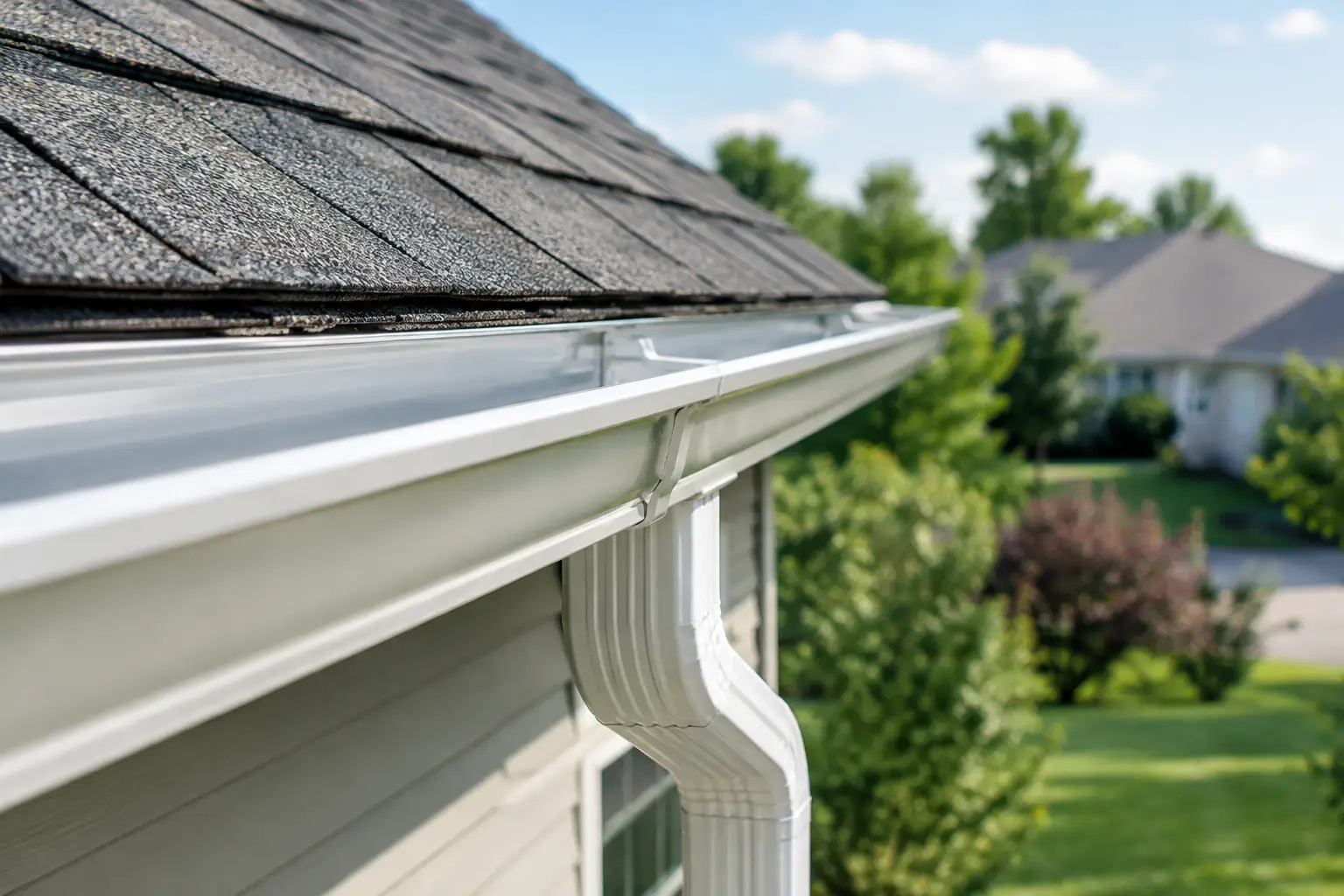
A gutter problem rarely starts with a dramatic collapse. More often, the early gutter replacement signs show up during an Iowa downpour: water spilling over an edge, a puddle growing near the foundation, or a streak of discoloration on the siding. Those small warnings deserve attention. Gutters are a key part of your home’s exterior protection system, directing rain and melting snow safely away from the roofline, walls, and foundation.
For Des Moines homeowners, that job gets harder through freeze-thaw cycles, spring storms, heavy summer rain, and winter snow. Knowing when a gutter can be repaired and when it should be replaced can help prevent a manageable exterior project from becoming a costly water-damage repair.
8 Gutter Replacement Signs to Watch For
1. Cracks, splits, or holes keep appearing
A small crack may seem minor, especially when it is visible only in a short section of gutter. But water finds openings quickly. It can run down siding, soak fascia boards, and collect near your foundation instead of traveling to the downspout.
One isolated puncture in an otherwise sound system may be repairable. Repeated cracks, multiple holes, or splits along seams point to an aging system that is no longer dependable. This is particularly true when the material has become brittle after years of temperature swings. A replacement provides a cleaner, more durable solution than continuing to patch failures one at a time.
2. Gutters sag or pull away from the house
Gutters should sit securely along the roof edge with a slight, intentional slope toward each downspout. If they sag in the middle, lean outward, or pull away from the fascia, water can pool instead of draining. The added weight of standing water, leaves, snow, and ice can make the problem worse.
Sometimes new hangers can correct a limited issue caused by a loose fastener. However, widespread sagging may mean the gutter channels are warped, undersized, or improperly supported. It can also signal rot behind the gutter. Before installing a new system, the fascia and roof edge should be inspected so the replacement has a solid surface to protect.
3. Water overflows during ordinary rainfall
Overflow is not always a sign that you need new gutters. Leaves, seed pods, and shingle granules can create a blockage that calls for thorough cleaning. A clogged downspout may produce the same result.
The concern is persistent overflow after cleaning, especially when rainfall is not unusually heavy. Gutters that are too narrow, incorrectly sloped, damaged, or missing adequate downspout capacity cannot move water away fast enough. In that case, replacement offers an opportunity to design a drainage system suited to your roof’s size and shape rather than repeating the same problem every season.
4. Peeling paint, rust, or orange staining appears
Paint should help protect metal gutters from moisture. When it peels, flakes, bubbles, or separates from the surface, the gutter may be holding water or corroding beneath the finish. Rust spots and orange stains are another clear warning that the material is losing its ability to resist moisture.
Surface discoloration does not always require immediate replacement, but corrosion is not a condition to ignore. Once metal begins to deteriorate, weak spots can spread. Replacing compromised sections early can protect the surrounding siding, trim, and landscaping from runoff that no longer follows its intended path.
5. Seams leak repeatedly
Sectional gutters have joints, and every joint is a possible place for water to escape over time. Sealant can fail due to age, movement, ice, and changing temperatures. A single leaking seam can often be resealed. Multiple recurring seam leaks are different.
If repairs have become routine, a new seamless gutter system may be the better long-term investment. Fewer joints mean fewer common leak points, and a properly fitted system supports more consistent water flow. The right choice depends on the condition of the rest of the gutter run, but repeated seam trouble should be evaluated rather than simply sealed again.
6. You find water or mildew around the foundation
Your gutters may look acceptable from the driveway while still sending water to the wrong place. Check the ground after rain. Water that pools near the home, washes mulch away, or leaves damp soil along the foundation can indicate a drainage issue.
Inside, a musty basement smell, damp lower walls, or visible moisture can have several causes, so gutters should not be blamed automatically. Still, poor roof runoff is one of the first exterior systems worth checking. Downspouts should discharge far enough from the foundation to give water room to move away, and they should not be crushed, disconnected, or aimed toward a walkway or low spot.
7. Fascia boards or soffits show signs of rot
Fascia is the board behind the gutter, and soffit is the finished underside of the roof overhang. When gutters leak, overflow, or pull away, these components can stay wet for extended periods. Watch for soft wood, peeling paint, dark staining, warped trim, or areas where the gutter attachment no longer feels secure.
This sign matters because a gutter replacement may need to be coordinated with trim repair. Installing new gutters over damaged wood only hides the underlying issue. A professional exterior assessment can identify whether the water problem began with the gutters, roof drainage, flashing, or a combination of conditions at the roofline.
8. Your gutters are old and require constant attention
Age alone does not determine whether gutters must be replaced. Well-maintained systems can perform for many years. The better question is whether yours still do their job without frequent patching, cleaning beyond normal maintenance, repainting, or reattaching.
When repairs keep adding up, replacement can offer better value and greater confidence. It also creates an opportunity to improve curb appeal with a color that complements your roofing, siding, and trim. For homeowners planning a roof replacement, coordinating the gutter work at the same time can make practical sense, since both systems meet at the roof edge and work together to manage water.
When a Repair Is Enough and When Replacement Is Smarter
Not every gutter issue requires a full replacement. Cleaning a blockage, resealing one joint, reconnecting a downspout, or replacing a few hangers can be an effective repair when the channels are structurally sound. A professional should be willing to explain that distinction clearly.
Replacement becomes the more sensible choice when the system has broad corrosion, frequent leaks, sagging runs, poor drainage design, or damage to the fascia behind it. The goal is not simply to install new metal along the roofline. It is to create reliable drainage that protects the home through the weather conditions central Iowa delivers year after year.
What to Expect From a Professional Gutter Assessment
A useful inspection should look beyond visible debris. The contractor should assess the gutter slope, attachment points, seams, downspout placement, roof edge, fascia condition, and signs of water damage on siding or near the foundation. They should also consider the roof’s layout. Valleys and large roof planes concentrate water in specific locations, and those areas may need additional capacity.
Guardian Roofing approaches exterior work as a connected system. A gutter recommendation should account for the condition of the roof, trim, siding, and drainage path, then match the solution to the home’s real needs. That practical perspective helps homeowners avoid paying for a quick fix that leaves the root cause in place.
If you have noticed overflowing water, loose gutter sections, or staining around your home, do not wait for the next major storm to test the system. A clear assessment and a free quote can give you the information needed to protect your home with confidence.