A hot upstairs bedroom, frost on attic nails, or ice building along the roof edge can all point to the same issue: the attic is not moving air as it should. Knowing how to improve attic airflow helps protect more than comfort. It can reduce moisture risk, support the life of your roofing materials, and help your home stand up to Iowa’s shifting weather.
Attic ventilation is not simply a matter of adding a few more vents. A dependable system needs a clear path for outside air to enter low on the roof, travel through the attic, and exit near the peak. Just as important, the attic floor must be properly insulated and air-sealed so warm, moist air from the living space does not overwhelm the ventilation system.
Why Proper Attic Airflow Protects Your Roof
Your roof and attic work together as one protective system. In summer, attic temperatures can rise far above the outdoor temperature. That heat can transfer into living areas and place added stress on shingles, roof decking, and other components over time.
Winter creates a different challenge for Des Moines homeowners. Heated indoor air can escape through gaps around light fixtures, plumbing penetrations, attic hatches, and wall openings. When that warm air reaches a cold attic, moisture can condense on roof decking and framing. Left unaddressed, repeated condensation may contribute to mold, wood deterioration, damaged insulation, and rusted fasteners.
Balanced ventilation helps remove heat and moisture. It also helps keep the roof deck closer to the outdoor temperature during cold weather, which can reduce conditions that contribute to ice dams. Ventilation alone will not solve an ice-dam problem, but it is a meaningful part of a well-designed solution.
Signs Your Attic May Need Better Airflow
Some ventilation concerns are visible from inside the house, while others show up on the roof. A professional attic and roof evaluation can identify the cause, but homeowners should pay attention to recurring warning signs.
Musty attic odors, damp or compressed insulation, dark staining on roof sheathing, and visible frost on nails or framing are all worth investigating. In warm weather, rooms directly below the attic may feel unusually hot or difficult to cool. High cooling costs can have several causes, but an overheated attic can be part of the picture.
Outside, uneven snow melt and thick ice ridges at the eaves deserve attention. So do curled, brittle, or prematurely aging shingles. These conditions do not automatically mean ventilation is the only problem. Insulation levels, indoor humidity, roof design, and air leaks all affect attic performance.
How to Improve Attic Airflow the Right Way
The most reliable approach is to evaluate the attic as a complete system. Adding an exhaust vent without enough intake air, for example, can limit performance and may pull air from places it should not, including the home itself.
Start with intake ventilation at the soffits
Soffit vents are installed beneath the roof overhang. They bring cooler outdoor air into the lowest part of the attic, creating the intake side of the ventilation system. Without adequate intake, ridge vents and other exhaust vents have little air to draw from.
Check whether existing soffit vents are blocked by insulation. This is common in older homes or attics where insulation was added without proper protection at the eaves. Rafter baffles, also called vent chutes, preserve an open channel between the soffit and attic while keeping insulation in place.
Not every home has wide soffits or enough room for conventional intake vents. Homes with limited overhangs may need a different ventilation strategy. The right option depends on roof design, available intake area, and the construction of the home.
Provide a clear exhaust path near the roof peak
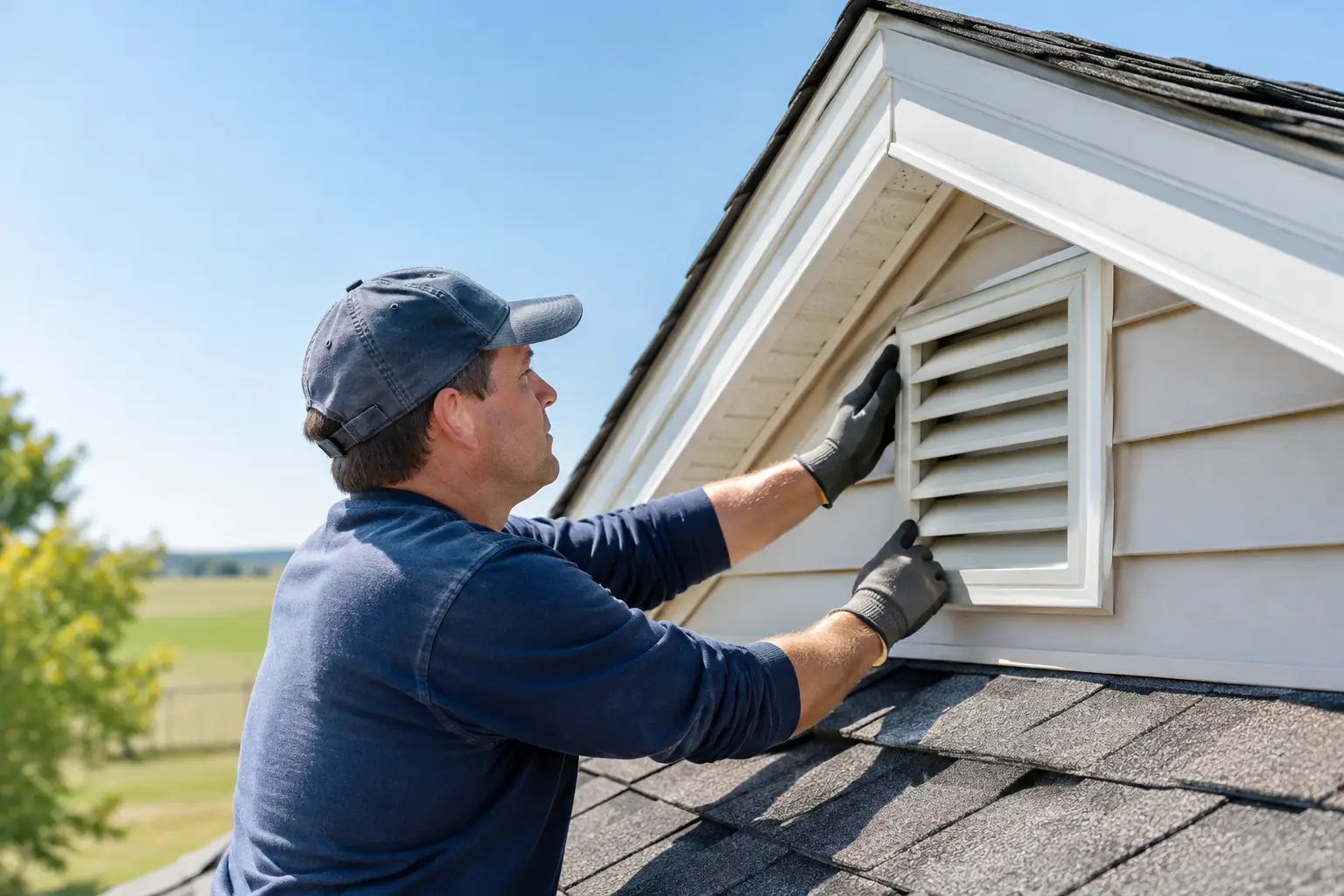
Warm air naturally rises, so exhaust ventilation is typically placed high on the roof. A continuous ridge vent is often an effective option because it allows air to leave evenly along the roof peak while maintaining a clean appearance. Other homes may use roof vents or gable vents when the design calls for them.
Exhaust ventilation should be selected and placed carefully. Combining several exhaust types on the same attic can disrupt airflow because one vent may draw air through another instead of pulling fresh air from the soffits. In many cases, a balanced soffit-and-ridge system provides the most consistent path from low intake to high exhaust.
The amount of ventilation needed is not a guess. Professionals calculate the required net free vent area based on attic size, insulation conditions, roof layout, local building requirements, and the roofing manufacturer’s installation standards. This is especially valuable on complex roofs with hips, valleys, dormers, or multiple attic spaces.
Air-seal the attic floor before adding more ventilation
Ventilation removes some moisture, but it cannot compensate for major air leaks from the home below. Air sealing is often the most overlooked part of attic improvement.
Common leakage points include openings around plumbing stacks, electrical wiring, recessed lights, bath fans, chimneys, and the attic access hatch. These areas should be sealed with materials appropriate for their location and heat-safety requirements. A chimney, for example, needs proper clearance and noncombustible materials rather than ordinary spray foam.
Bathroom and kitchen exhaust fans should also vent outdoors, not into the attic. Sending warm, humid air into an enclosed attic can create serious moisture problems even when the attic has roof vents.
Confirm insulation is doing its job
Once air leaks are addressed, insulation helps keep indoor heat where it belongs. Proper insulation reduces the temperature difference that drives heat loss into the attic, improving comfort and lowering the chance of snow melting unevenly across the roof.
Insulation should not cover soffit vents or crush the ventilation channel at the eaves. It should also be dry. Wet insulation loses effectiveness and may signal a roof leak, condensation issue, or improperly vented exhaust fan. If insulation is stained, matted, or damp, identify and correct the source before simply adding more material.
Keep vents clear through every season
A ventilation system needs maintenance, particularly after storms and during seasonal roof care. Leaves, nests, windblown debris, paint, and deteriorated screening can restrict openings. On the roof, damaged or poorly installed vents can allow water intrusion rather than provide dependable exhaust.
From the ground, look for visibly damaged vent covers, sagging soffits, and debris at roof edges. Avoid walking on a roof or entering an attic without safe access. Attics often contain exposed nails, low-clearance framing, weak walking surfaces, and electrical hazards.
Avoid Quick Fixes That Create New Problems
Powered attic fans can seem like an easy answer to summer heat, but they are not automatically the best choice. If intake ventilation and air sealing are inadequate, a powered fan may pull conditioned air from the home into the attic. That can increase energy use and introduce more indoor moisture during winter.
Similarly, cutting additional holes in the roof without a ventilation plan can compromise a newer roof system or create unnecessary leak points. Every penetration should be properly flashed, compatible with the roofing materials, and installed according to manufacturer requirements.
Do not assume a roof replacement alone will correct ventilation concerns. A new roof is an ideal time to review intake, exhaust, decking condition, and insulation barriers, but the attic details still need to be addressed intentionally.
When to Schedule a Professional Roof and Attic Evaluation
Call for an evaluation if you see recurring ice dams, attic condensation, active leaks around vents, mold-like staining, or unexplained heat buildup upstairs. It is also wise to have ventilation reviewed before a roof replacement, especially if the current roof has aged prematurely or you are considering premium materials designed for long-term performance.
A qualified roofing professional can inspect the roof exterior, attic space, vent placement, decking, and moisture indicators together. That complete view helps distinguish between a ventilation issue, an insulation issue, a roof leak, or a combination of concerns. Guardian Roofing helps homeowners make informed exterior decisions with recommendations based on the home’s actual needs, not a one-size-fits-all repair.
A well-ventilated attic is quiet protection working above your ceiling every day. Addressing airflow now can help preserve the roof system, improve year-round comfort, and give your home a stronger defense against the next Iowa season.