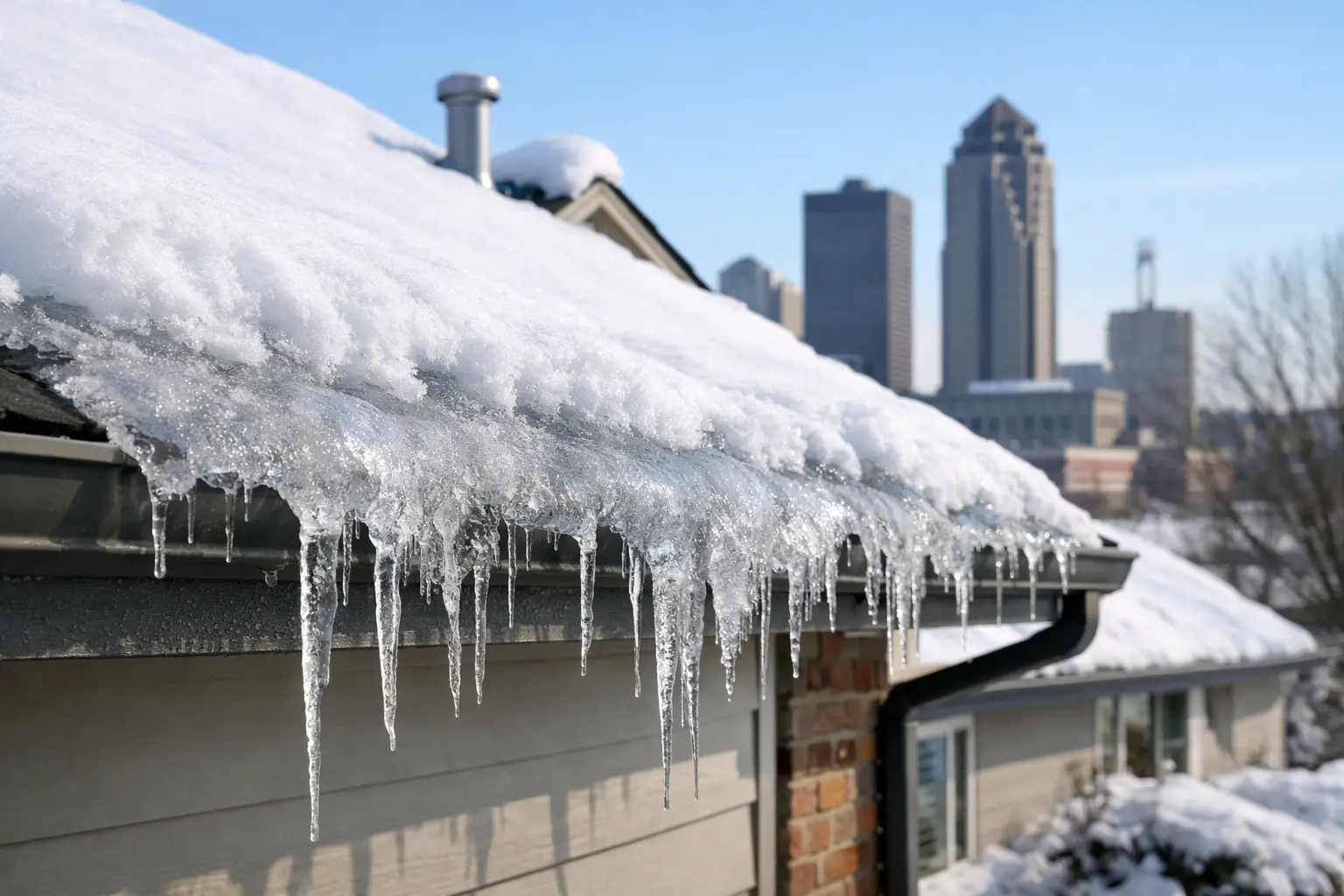
A thick ridge of ice along the edge of a roof can look like a normal part of an Iowa winter. It is not always harmless. This ice dam prevention guide explains why those ridges form, what they can do to a home, and how Des Moines homeowners can reduce the risk before snow and freeze-thaw cycles put their roofing system to the test.
Ice dams are not simply a gutter problem or a sign that a roof needs to be scraped clean. They usually point to uneven roof temperatures caused by heat escaping from the home. Addressing the source protects more than shingles. It helps protect your attic, insulation, ceilings, walls, gutters, and the investment you have made in your home.
What Causes an Ice Dam?
An ice dam forms when snow on the upper portion of a roof melts, then runs down toward the colder eaves and refreezes. As more meltwater reaches that frozen edge, ice builds up. Eventually, water can pool behind the ice and work its way beneath shingles or other roofing materials.
The key issue is heat loss. A properly performing roof deck stays cold in winter because the living space below is insulated and air sealed. When warm indoor air leaks into an attic, it heats the roof from below. Snow melts where the roof is warm, while the overhang remains cold enough to freeze that water again.
Iowa weather makes this cycle especially common. A snowfall followed by bright sun, daytime temperatures near freezing, and a sharp overnight drop can create repeated melting and refreezing. Even a newer roof can develop ice dams if the attic insulation, ventilation, or air sealing is not doing its job.
Ice Dam Prevention Guide: Start Inside the Home
The most effective prevention work often begins in the attic, not on the roof. Adding more insulation may help, but insulation alone does not always solve the problem. Air leaks can carry warm, moist air directly into the attic and reduce the performance of the insulation already in place.
Common leak points include openings around plumbing stacks, electrical wiring, recessed lights, attic hatches, bathroom fans, chimneys, and ductwork. A home with uneven temperatures, chilly upper rooms, or unusually high heating bills may have air leakage that is contributing to roof snow melt.
A qualified contractor or energy professional can evaluate the attic and identify where warm air is escaping. The right repair may involve air sealing first, then improving insulation to the appropriate depth and coverage for the home. Every house is different. Older homes often need more targeted work around additions, finished attic spaces, or complicated rooflines.
Keep Attic Ventilation Working
Ventilation is the other half of the attic system. Soffit intake vents and ridge or roof exhaust vents help remove moisture and keep the attic closer to the outdoor temperature. That helps limit snow melt caused by a warm roof deck.
Ventilation only works when air has a clear path from the soffits to the exhaust vents. Insulation can sometimes block soffit vents, especially near the eaves. Vent baffles help preserve that airflow while keeping insulation where it belongs.
More ventilation is not automatically better, however. An attic with major air leaks from the home can still become too warm and moist, no matter how many vents it has. The goal is a balanced system: a well-sealed ceiling plane, adequate insulation, and clear intake and exhaust ventilation.
Manage Snow Safely and Early
Removing excess snow from the lower edge of a roof can reduce the amount of meltwater available to form an ice dam. A roof rake with an extension handle allows homeowners to pull snow down from the ground. Focus on the lower few feet of the roof rather than trying to clear the entire surface.
Use steady, gentle pulls and keep the rake edge away from shingles, flashing, and gutters. Aggressive scraping can loosen roofing materials or damage protective granules on asphalt shingles. Never use a metal shovel, axe, hammer, or open flame to break up ice. Those approaches can damage the roof, create leaks, and put anyone nearby at risk.
Roof snow removal is not right for every property. Steep roofs, heavy snow loads, icy walkways, overhead power lines, and hard-to-reach areas call for professional help. Safety is always worth more than clearing a few more feet of snow.
Do Gutters Prevent Ice Dams?
Clean, properly secured gutters matter, but gutters do not prevent ice dams on their own. The ice forms because of a temperature difference across the roof, not because a gutter is clogged. In fact, gutters can freeze solid during severe weather even when they are clean.
That said, fall gutter cleaning remains a smart part of exterior maintenance. Leaves and debris can trap water, add weight to the gutter system, and complicate drainage when snow begins to melt. Check that downspouts direct water away from the foundation and that gutter fasteners are secure before winter arrives.
Heated gutter cables are sometimes used in trouble areas, but they should be viewed as a limited solution rather than a replacement for attic improvements. They use electricity, require correct installation, and may not address water backing up beneath shingles. For a persistent ice dam problem, it makes more sense to find out why the roof is warming unevenly.
Watch for Early Warning Signs
A small amount of ice along an eave does not always mean water is entering the house. Still, homeowners should pay attention when patterns repeat or become more severe. Look for these signs after a snow event:
- Large icicles or a thick ice ridge along roof edges
- Water stains, damp drywall, or peeling paint on upper-level ceilings and walls
- Frost or condensation inside the attic
- Sagging, pulled-away, or overflowing gutters
- Snow melting in irregular patches while surrounding roofs remain snow-covered
Water damage may appear far from the roof edge because it can travel along framing and insulation before reaching a visible ceiling or wall. Prompt attention can prevent a small issue from becoming a larger repair.
If an Ice Dam Has Already Formed
Avoid trying to chip the ice away. Breaking ice with tools can crack shingles, bend gutters, damage flashing, and expose the roof deck. Chemical ice-melt products should also be used cautiously. Some products can harm landscaping, discolor exterior surfaces, or corrode metal components if used improperly.
A roofing professional can assess whether water is backing up under the roof covering and recommend a safe removal approach. In some cases, low-pressure steam removal is appropriate because it clears ice without striking the roofing materials. The immediate goal is to reduce the risk of water intrusion. The longer-term goal is to correct the attic and roof conditions that allowed the dam to form.
Build Ice Dam Resistance Into Roof Replacement
When a roof is nearing the end of its service life, replacement is an opportunity to improve winter protection. A well-planned roofing project should consider the entire system, including the roof covering, underlayment, flashing, ventilation, and ice-and-water protection at vulnerable eaves and valleys.
Material selection matters, but no roofing material can fully overcome significant heat loss from the attic. Dual-layer asphalt shingles and stone-coated steel roofing can deliver durable, attractive protection when installed as part of a complete system. The right choice depends on your home’s roof design, long-term plans, budget, and desired appearance.
For Des Moines homeowners, a roof inspection before winter can bring clarity to concerns about aging shingles, damaged flashing, ventilation, and drainage. Guardian Roofing can help evaluate the condition of your roof and discuss exterior improvements that support lasting protection.
A dry attic, even roof temperatures, and a well-maintained roofing system are the best defenses against winter water damage. Taking care of those details before the next heavy snowfall gives your home a stronger chance to weather the season with confidence.