A roof can look acceptable from the driveway while its protective life is already fading. For homeowners considering a Des Moines roof replacement, the real question is not simply whether a few shingles are missing. It is whether the entire roofing system can continue protecting the home through wind, heavy rain, snow, ice, and the repeated temperature swings that Iowa weather brings.
Replacing a roof is a meaningful investment, but it is also an opportunity to improve the home’s resilience, appearance, and long-term value. The right system should suit the property, the homeowner’s priorities, and the level of protection the home needs for the years ahead.
When Des Moines Roof Replacement Makes Sense
A roof does not always fail in one dramatic moment. More often, it shows a pattern of aging or damage that becomes harder and more expensive to ignore. Curled or cracked shingles, widespread granule loss, dark streaking, exposed nail heads, sagging areas, and recurring leaks are all signs that a professional evaluation is warranted.
Storm damage deserves prompt attention, especially after high winds or hail. A few lifted or broken shingles can allow water beneath the roof surface, where damage may spread to underlayment, decking, insulation, and interior finishes. Even when a leak has not appeared inside, a roof may have damage that affects its ability to shed water properly.
Age matters too, although it is not the only factor. Asphalt roofing can provide many years of service, but sun exposure, attic ventilation, installation quality, and past storm events all affect how long it performs. A roof near the end of its expected service life may be a stronger candidate for replacement than repeated repairs, particularly if repairs are becoming frequent or the shingle color and style are no longer available.
Replacement is also worth considering when a homeowner wants to make an intentional exterior improvement. A new roof can bring a more current color palette, stronger architectural definition, and a better visual connection with siding, trim, windows, and gutters. That matters when preparing to sell, but it also matters for homeowners who plan to enjoy and protect their property for decades.
Look Beyond the Shingles
A roof is a system, not just the visible material on top. Lasting performance depends on the parts beneath and around the roofing surface: decking, underlayment, flashing, ventilation, drip edge, and the details where the roof meets walls, chimneys, skylights, and valleys.
During a replacement, the existing roof should be evaluated for concealed concerns that may not be visible from the ground. Soft or deteriorated decking, for example, cannot provide a dependable base for a new roofing system. Flashing that has failed around penetrations or transitions can become a source of future leaks even when the field shingles are new.
Attic ventilation also deserves careful attention. Excess heat and moisture in an attic can place unnecessary stress on roofing materials and contribute to condensation concerns. The right approach depends on the home’s design, insulation, existing intake and exhaust ventilation, and roof geometry. There is no one-size-fits-all fix, which is why an on-site assessment is more valuable than a quick estimate based only on square footage.
A thorough contractor should explain what is included in the project and why. Homeowners should be able to understand how the new roof will manage water, where flashing will be installed, how ventilation will be addressed, and what happens if underlying repairs are found during the work.
Choosing Materials for Iowa Weather
The best roofing material depends on your budget, design preferences, long-term plans, and tolerance for future maintenance. A dependable recommendation should not push one product for every house. It should connect material choices to clear homeowner outcomes: weather resistance, curb appeal, longevity, and value.
Dual-layer asphalt shingles
Dual-layer asphalt shingles remain a popular option for Des Moines homes because they offer attractive dimensional appearance, broad color selection, and practical value. Their layered construction creates more depth than basic three-tab shingles and can complement a wide range of home styles, from traditional ranch homes to newer two-story properties.
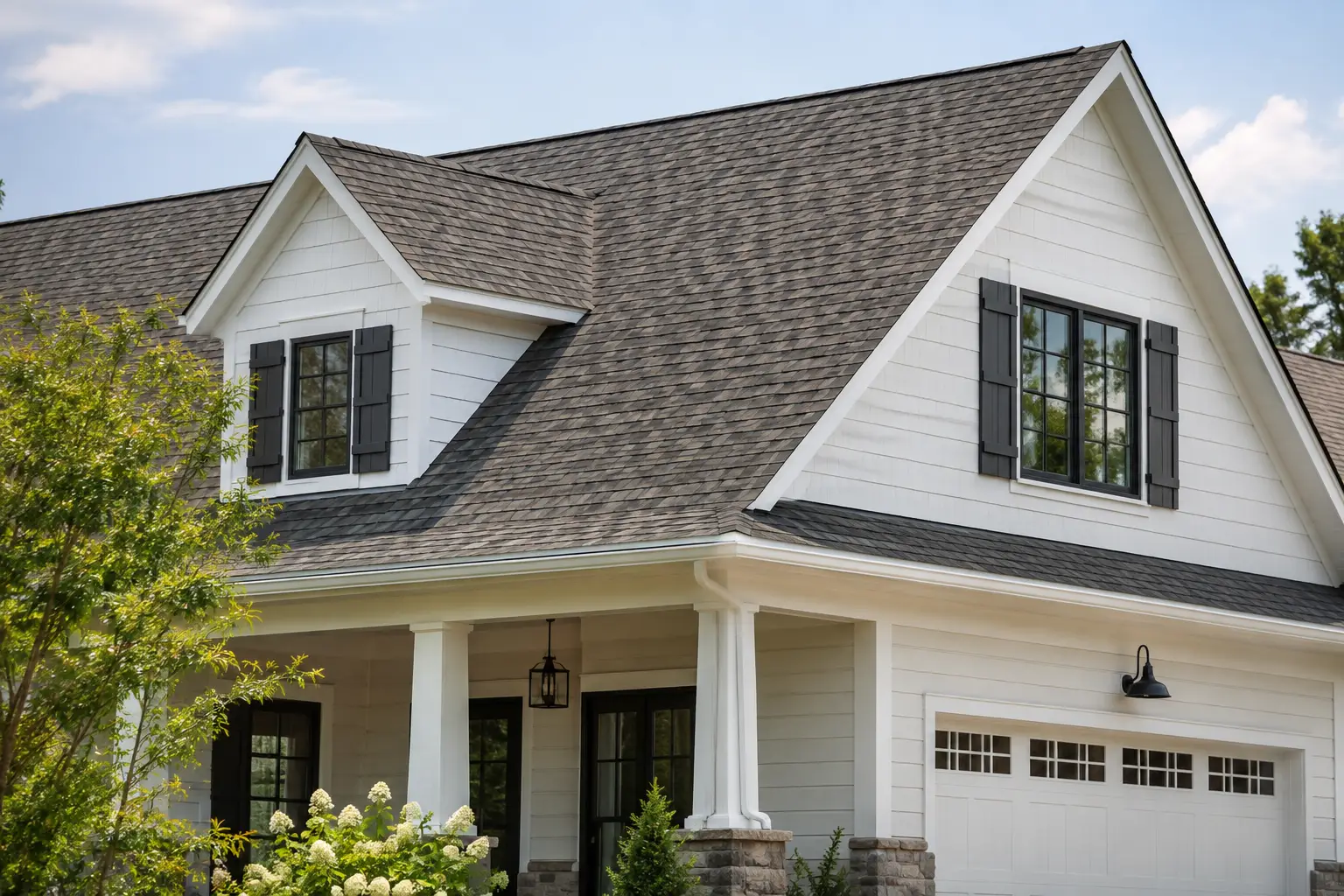
Asphalt is often the right fit for a homeowner who wants a quality upgrade with a familiar appearance and competitive upfront cost. Color selection can make a substantial difference. A warm brown, weathered gray, deep charcoal, or blended tone can either soften or sharpen a home’s exterior, depending on the siding and trim.
The trade-off is that asphalt, like any roofing material, is subject to the effects of time and severe weather. Product quality, installation, ventilation, and ongoing care all influence its service life. For many homes, a premium dual-layer shingle is an excellent balance of performance and affordability.
Stone-coated steel roofing
For homeowners focused on exceptional durability and a lifetime-oriented exterior investment, stone-coated steel roofing offers a different level of protection. Unified Steel stone-coated roofing is available in five architectural profiles, giving homeowners the ability to choose a look that fits the character of their home without sacrificing the strength of steel.
Stone-coated steel can provide the visual character of more traditional roofing styles while delivering durable performance in demanding weather conditions. It is especially appealing for homeowners who plan to stay in their homes long term, want to reduce the likelihood of repeated replacement cycles, or want a premium roof that stands out for both resilience and curb appeal.
The higher initial investment is a real consideration. Yet the value equation changes when longevity, strength, maintenance expectations, and long-term ownership are part of the decision. A qualified roofing professional can help compare the upfront cost with the protection and performance expected over the life of the system.
Coordinate the Entire Exterior
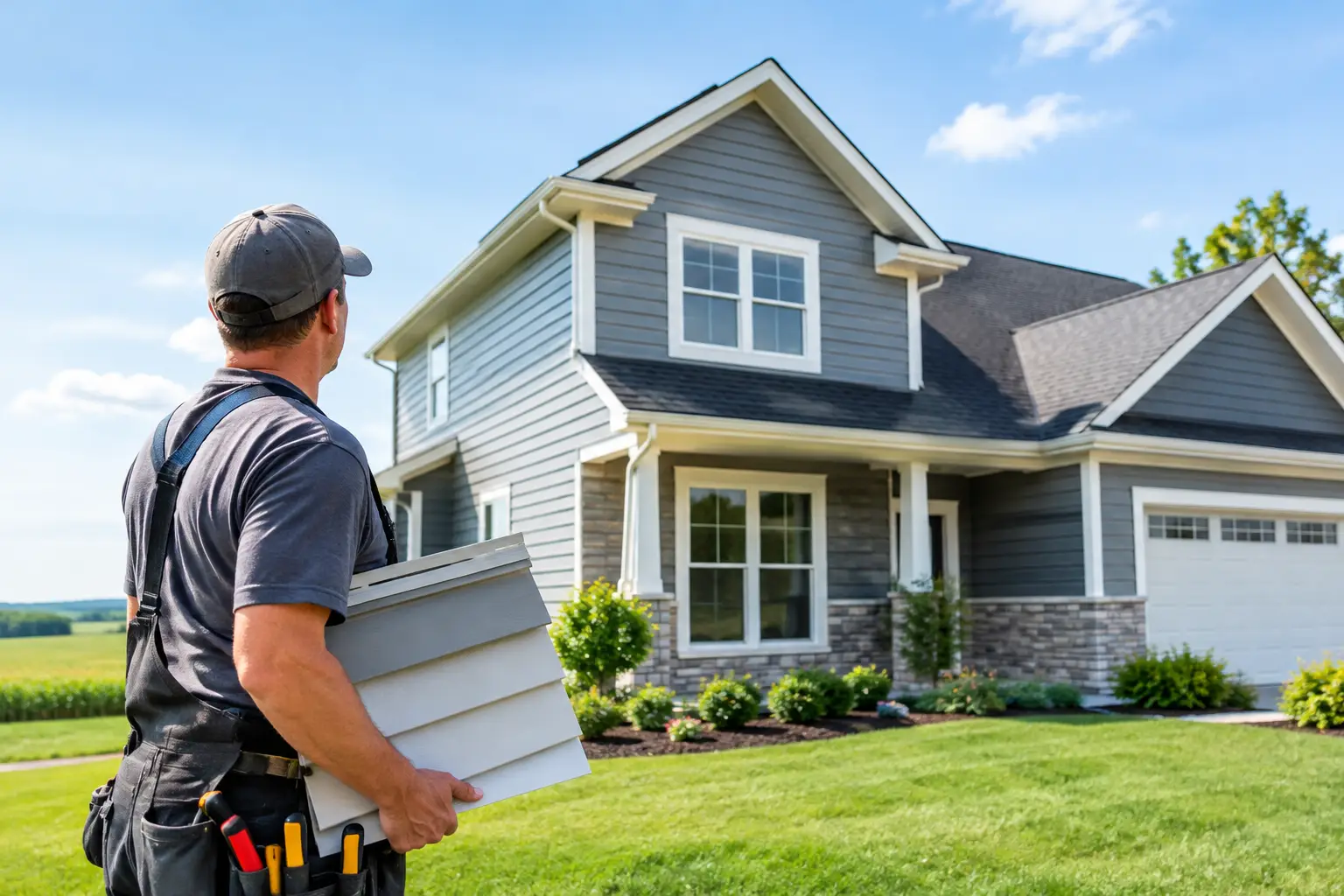
A roof replacement can reveal opportunities to improve other parts of the home’s exterior. Gutters may need replacement or adjustment to manage runoff correctly from a new roof. Aging siding can make a new roof look out of place, while older windows may continue to affect comfort and energy efficiency even after the roofing work is complete.
That does not mean every project needs to become a full exterior renovation. Sometimes the roof is the immediate priority, and that is the right place to start. But planning the exterior as a coordinated system can prevent mismatched colors, duplicated labor, and decisions that have to be revisited a few years later.
For example, a homeowner replacing both roof and gutters can choose colors that complement each other from the start. Someone considering siding in the near future may prefer a versatile roof color that will work with several siding options. These choices are easier to make when one experienced team can look at the full property rather than treating each component in isolation.
What a Reliable Replacement Process Should Feel Like
A roof project should be clearly explained before the first shingle is removed. The process begins with a property-specific inspection and conversation about the home’s age, roof condition, storm history, design goals, and budget. A free quote should outline the recommended system in understandable terms, not bury essential details in vague language.
Before work begins, homeowners should know the material being installed, the scope of tear-off, the treatment of flashing and underlayment, how the property will be protected during construction, and how cleanup will be handled. If financing is helpful, it should be discussed plainly so that a stronger roofing system is not automatically ruled out by the initial cost.
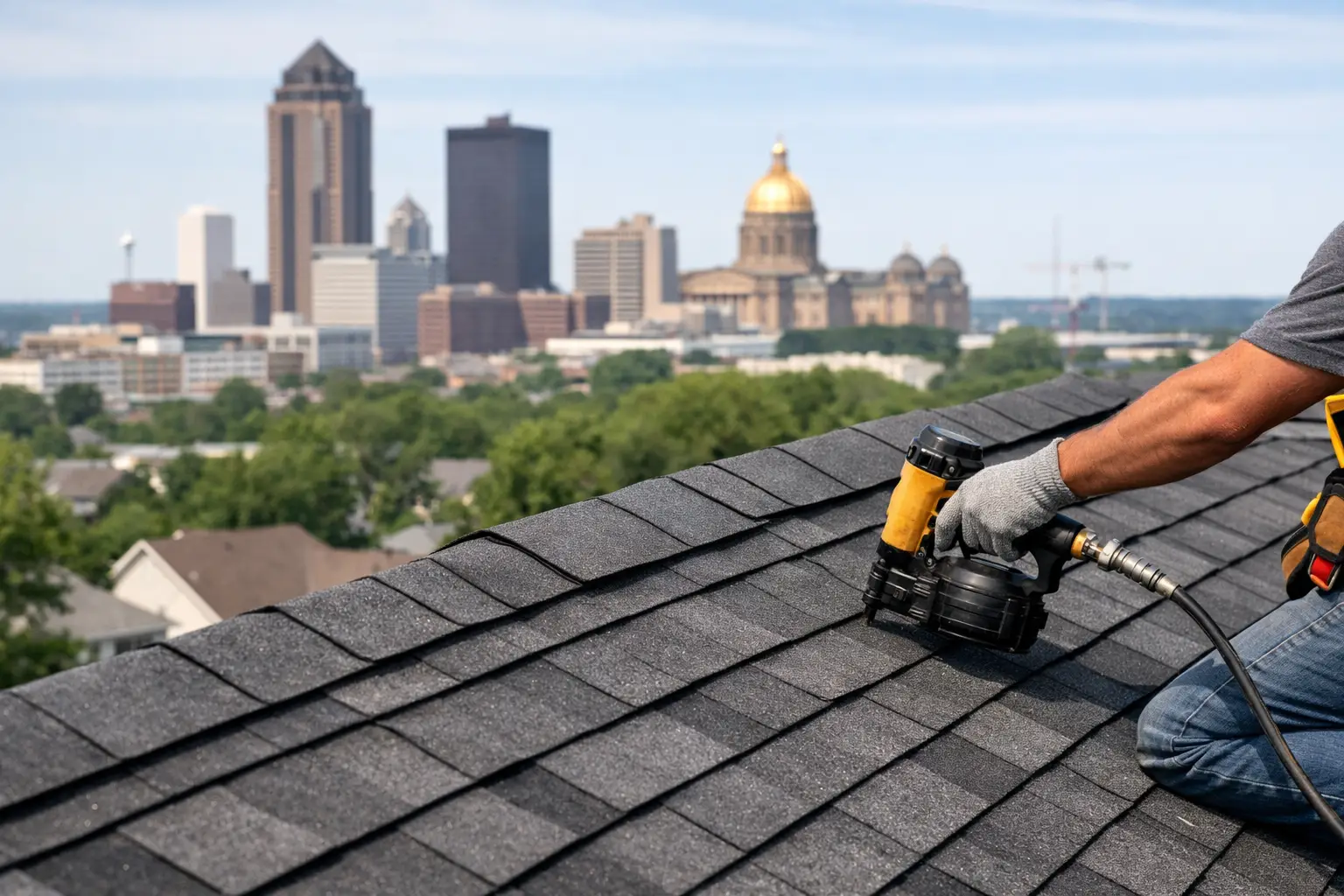
Communication matters during installation as well. Roofing work can be disruptive for a short period, but a professional crew minimizes uncertainty by arriving prepared, protecting landscaping and surrounding areas, keeping the site orderly, and addressing questions quickly. Final inspection is the point to confirm that the system looks right, performs as intended, and leaves the property clean.
Guardian Roofing approaches this decision as a long-term protection plan for your home, not a one-day transaction. The goal is to match homeowners with durable materials and skilled installation that make sense for their property and priorities.
A Des Moines Roof Replacement Is an Investment in Confidence
The lowest price is not always the lowest cost over time. A quote that leaves out essential system components, uses lower-grade materials, or overlooks underlying conditions can lead to repairs and frustration later. At the same time, the most expensive option is not automatically the best choice for every homeowner. The right roof is the one that delivers appropriate protection, appearance, and value for the way you plan to live in your home.
If your roof is aging, showing storm damage, or no longer giving you confidence when the forecast turns severe, a professional evaluation can bring clarity. A free, detailed quote gives you a practical starting point: understand your roof’s condition, compare materials honestly, and choose protection you can count on before a small concern becomes a larger one.