A window replacement should do more than freshen up your home’s appearance. In Des Moines, it needs to help manage summer humidity, winter cold, wind-driven rain, and the daily comfort of every room. When comparing double pane versus triple windows, the better choice is not automatically the window with more glass. It is the option that fits your home, budget, exposure, and long-term goals.
Both window types can be a meaningful improvement over old single-pane windows or aging units with failed seals, drafts, and worn frames. The difference comes down to how much added insulation and comfort you need – and whether the extra investment delivers value for your particular home.
Double Pane Versus Triple Windows: The Core Difference
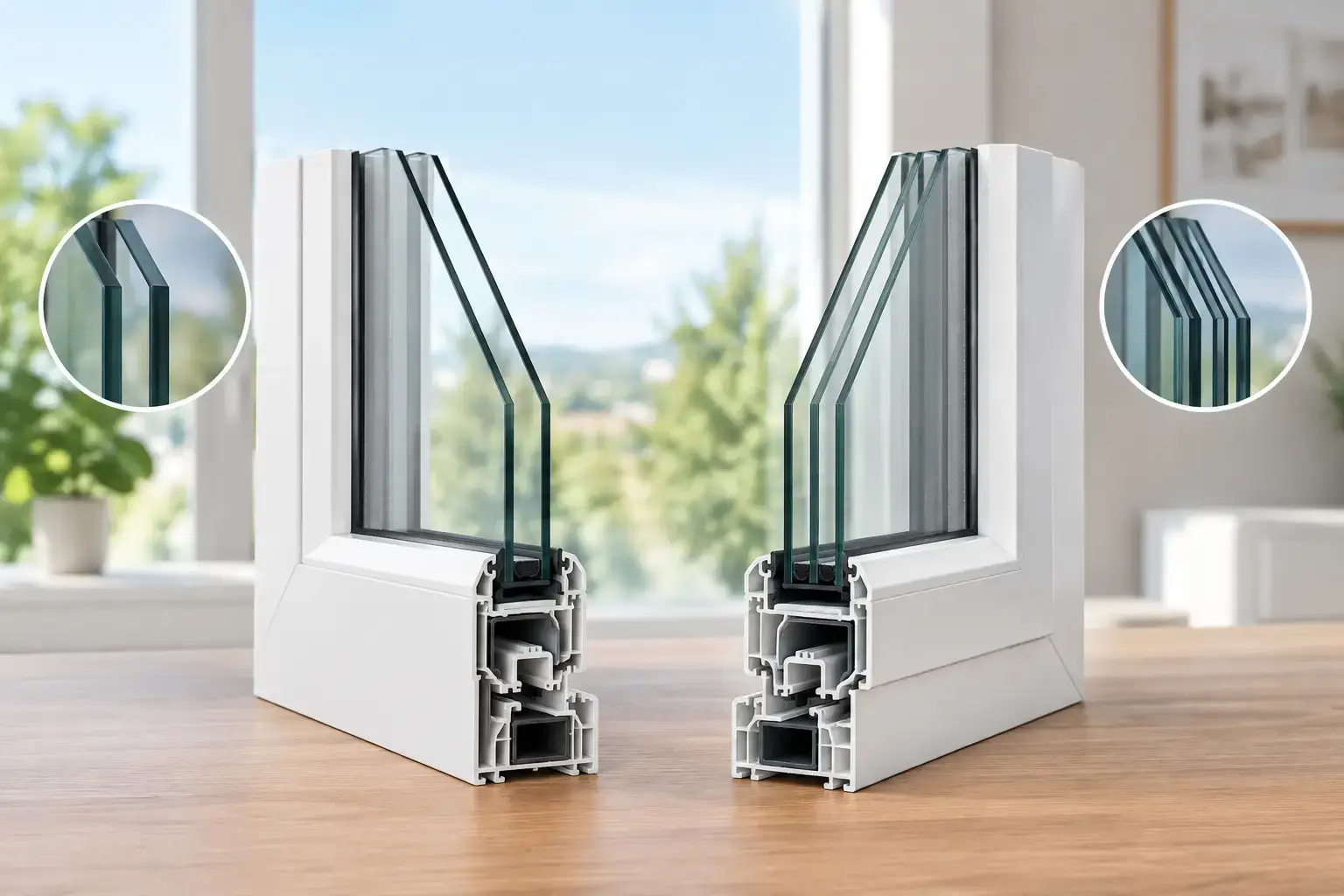
A double-pane window has two panes of glass separated by a sealed insulating space. A triple-pane window has three panes of glass and two insulating spaces. Those spaces are typically filled with an inert gas, such as argon, to slow heat transfer, while low-emissivity, or Low-E, coatings help manage radiant heat.
That added pane gives triple-pane windows an advantage in insulation. Heat has a harder time moving through the complete window system, which can make rooms near the glass feel more even and comfortable during Iowa’s coldest stretches.
Still, pane count is only one part of performance. A well-built double-pane window with quality Low-E glass, insulated frames, careful installation, and proper air sealing can outperform a poorly made or poorly installed triple-pane window. Homeowners should compare complete window specifications rather than rely on the number of panes alone.
Why Windows Matter in an Iowa Home
Your windows are part of the exterior system protecting your home. Along with roofing, siding, gutters, insulation, and ventilation, they help control how weather affects the rooms inside. When windows leak air or transfer too much heat, your heating and cooling equipment works harder and your home can feel less consistent from one room to the next.
Cold-weather comfort is often the deciding factor for Iowa homeowners. Older windows may create chilly areas near the glass, visible condensation, or frost during severe weather. Triple-pane windows can reduce the cold interior-glass effect more effectively than standard double-pane units. For bedrooms, living rooms, and other spaces where people sit close to windows, that difference can be noticeable.
Summer performance matters, too. The right glass package can limit unwanted solar heat gain, particularly on large west- and south-facing openings. However, homeowners should not assume that triple-pane glass always provides the best summer solution. Glass coatings, window orientation, shading, and the amount of glass in each room all affect comfort.
Understanding U-Factor and Solar Heat Gain
Two ratings can make a window comparison more useful. U-factor measures how readily a window transfers heat. Lower numbers indicate better insulating performance. Triple-pane windows commonly achieve lower U-factors than double-pane options.
Solar heat gain coefficient, or SHGC, measures how much solar heat passes through the window. Lower SHGC can help control summer heat, while a moderately higher rating may be beneficial where winter sunlight provides welcome warmth. The right balance depends on the orientation of the window and how the room is used.
Ask for the performance ratings of the exact window configuration being proposed. Frame material, glass coatings, spacers, grilles, and sash design can change the final result.
When Double-Pane Windows Are the Practical Choice
For many homes, a premium double-pane window is a smart, dependable investment. It can deliver substantial gains in energy efficiency, comfort, and appearance over aging windows without carrying the added cost and weight of a triple-pane unit.
Double-pane windows often make sense when the existing windows are single-pane, drafty, difficult to operate, or showing seal failure. In those cases, the improvement is already significant. They can also be the better fit for a homeowner replacing many windows at once and prioritizing a balanced investment across the entire exterior.
They are especially worth considering if your home has good attic insulation, a well-maintained heating system, and no persistent comfort problems near the windows. Addressing several areas of heat loss can often make a greater difference than putting the entire budget into the highest-performing glass package.
A quality double-pane option may also offer more design flexibility within a given budget. That can help homeowners choose the window style, color, hardware, and exterior profile that best complement their siding, trim, and overall curb appeal.
When Triple-Pane Windows Earn Their Added Cost
Triple-pane windows are often a strong choice for homeowners who place a high value on winter comfort, quiet interiors, and long-term thermal performance. The additional glass and insulating space can reduce heat loss, improve interior glass temperatures, and lessen the cold feeling that develops near windows during a Midwest winter.
They are particularly worth considering in rooms with large window areas, north-facing exposures, vaulted spaces, and rooms that have always felt cold or difficult to heat. Bedrooms and family rooms near busy streets may also benefit from improved sound control. Triple-pane windows are not soundproof, and glass thickness and airspace design matter greatly, but they can help reduce outside noise.
Homeowners planning to stay in their property for many years may find the premium easier to justify. The value is not limited to utility savings. More even temperatures, reduced drafts, less condensation risk, and a quieter home can improve daily living over every season.
The trade-off is upfront cost. Triple-pane windows are usually more expensive and heavier than comparable double-pane products. Not every opening needs them, and not every home will see the same payback. A thoughtful recommendation may involve triple-pane windows in the most exposed or heavily used rooms, with high-quality double-pane windows elsewhere.
Installation Protects Window Performance
Even an excellent window cannot perform as intended if it is installed carelessly. The opening must be properly measured, the old window removed without damaging surrounding materials, and the new unit set square, level, and plumb. Flashing, insulation around the frame, air sealing, and exterior trim details all matter.
Poor installation can leave gaps that allow air and moisture into the wall assembly. That can undermine energy performance and, over time, contribute to hidden damage around the opening. Homeowners should look beyond the glass package and ask how the installer will address water management, insulation, and finishing details.
This is also a good time to evaluate the wider exterior. If you are planning roof, siding, gutter, or window work, coordinating the projects can help create a more consistent weather-protection system and a finished appearance that feels intentional.
Questions That Lead to a Better Window Decision
Before choosing between double-pane and triple-pane windows, consider the rooms that bother you most. Are they cold in winter, hot in late afternoon, noisy, or difficult to keep comfortable? Are the windows failing, or is the larger issue poor insulation and air leakage elsewhere?
It also helps to consider how long you expect to own the home. A homeowner preparing a property for sale may prioritize appearance, reliable operation, and cost-conscious energy improvements. A homeowner planning to remain for decades may put more weight on comfort through severe weather and lifetime performance.
Request a clear, written comparison of the proposed window options. It should identify the U-factor, glass coatings, warranty coverage, frame construction, installation scope, and total project cost. Avoid comparing one quote that includes full exterior trim and air sealing with another that only covers the window unit itself.
Choose Protection That Fits Your Home
The right window should make your home feel more protected, not leave you second-guessing the investment. Double-pane windows remain a capable choice for many Des Moines homes, while triple-pane windows can deliver an extra layer of comfort where cold, noise, and exposure are ongoing concerns.
Guardian Roofing helps homeowners consider window upgrades as part of a coordinated exterior plan, with clear recommendations based on the home rather than a one-size-fits-all answer. A careful evaluation of your current windows, room comfort, and long-term plans can reveal where an added pane is worthwhile – and where a high-quality double-pane window will provide the protection you need for years to come.