A Des Moines winter can expose every weak point in a home’s exterior. If the room near your windows feels chilly, your curtains move on a windy day, or melting snow leads to moisture on the glass, it may be time to look beyond appearance alone. The best windows for cold climates are built and installed as part of a protective exterior system, reducing heat loss while standing up to Iowa’s sharp temperature swings.
A new window should make your home more comfortable, but it should also support lower heating demands, reduce drafts, protect surrounding finishes from moisture, and improve curb appeal. The right choice depends on your home’s orientation, existing wall condition, budget, and the level of long-term performance you expect.
What Makes the Best Windows for Cold Climates?
For cold-weather performance, start with a window’s ability to resist heat transfer and air leakage. Window labels provide useful information, but no single number tells the whole story.
The U-factor measures how readily a window transfers heat. Lower is better in a cold climate because it means less indoor heat is escaping through the glass and frame. Homeowners in central Iowa should generally prioritize a low U-factor, especially for large window openings and rooms exposed to prevailing winter winds.
The Solar Heat Gain Coefficient, or SHGC, measures how much solar heat passes through the window. A higher SHGC can be useful on south-facing windows that receive welcome winter sun. However, high solar gain is not automatically the right answer for every opening. West-facing glass can contribute to uncomfortable summer heat, while shaded windows may receive little benefit from solar gain at all.
Air leakage matters just as much. Even quality insulated glass will not feel comfortable if outside air is finding a path around operable sashes, frames, or poorly sealed installation gaps. Look for windows designed with dependable weatherstripping and ask how the full opening will be insulated and sealed during installation.
Choose insulated glass made for winter
Most replacement windows for cold climates should have double-pane insulated glass at a minimum. Two panes separated by a sealed space slow heat loss far more effectively than older single-pane windows. Low-E coatings reflect interior heat back into the room, while argon gas between panes adds another layer of insulation.
Triple-pane windows can offer stronger thermal performance, particularly in bedrooms, large picture windows, and exposed locations where homeowners notice cold glass or persistent drafts. They can also improve sound control. The trade-off is cost, weight, and sometimes a modest reduction in visible light. For some homes, high-quality double-pane Low-E glass provides the best balance of performance and value. For others, triple-pane glass is a worthwhile long-term investment.
Do not assume every Low-E coating performs the same way. Coating placement and glass package design affect U-factor, solar gain, and visible light. A qualified exterior professional can help match the glass package to each side of your home rather than applying one option everywhere.
Frame Materials Affect Comfort and Durability
The glass receives most of the attention, but the frame has a major role in a window’s cold-weather performance. It creates the perimeter seal, supports the insulated glass unit, and must hold its shape through years of freeze-thaw cycles.
Vinyl windows are a popular choice because they are low-maintenance, cost-effective, and can provide good insulation when built with quality multi-chamber frames. Their performance varies by manufacturer and construction quality, so compare more than the sales price.
Fiberglass frames are exceptionally stable through changing temperatures and can provide excellent strength and insulation. They are often a premium option, but their durability can make sense for homeowners focused on long service life and larger openings.
Wood offers natural insulation and a traditional appearance, especially in older homes. It requires consistent maintenance to protect it from moisture. Wood-clad windows pair a wood interior with a protective exterior cladding, giving homeowners interior warmth and exterior durability at a higher price point.
Aluminum frames are strong and slim, but standard aluminum transfers heat readily. They are usually less suitable for cold Iowa conditions unless they include a well-designed thermal break. Frame material should never be selected by appearance alone.
Select Window Styles That Seal Reliably
Every window style involves a compromise between ventilation, views, operation, and weather resistance. Fixed picture windows do not open, so they generally offer the tightest seal and the strongest energy performance. They work well where natural light and an unobstructed view matter more than airflow.
Casement and awning windows often perform very well in cold climates because the sash closes against the frame with a compression seal. Casements open outward from the side, while awnings hinge at the top. Both can provide controlled ventilation during milder weather.
Double-hung windows remain a practical, classic choice for many Iowa homes. They offer flexible ventilation and easy cleaning when both sashes tilt inward. Because they have more moving parts and sliding seals, quality construction and proper adjustment are especially important. A poorly fitted double-hung window can lose the performance advantages promised by its glass package.
Installation Is Part of the Window System
A high-performance replacement window cannot compensate for gaps in the rough opening, damaged framing, or improper flashing. Installation is where the product becomes part of your home’s weather barrier.
Before work begins, the installer should assess the condition of the existing opening and look for signs of hidden water intrusion, soft wood, failed caulking, or siding issues. Simply covering a damaged opening can leave the underlying problem in place. If repairs are needed, address them before the new window is sealed in.
A proper cold-climate installation includes careful shimming, insulation around the frame, exterior flashing or water-management details where appropriate, and durable sealants applied to clean, prepared surfaces. The goal is not to trap water inside the wall. It is to direct water out while stopping uncontrolled air movement.
This is also why coordinated exterior planning is valuable. Window trim, siding, gutters, and roofing details all influence how water moves around the home. When multiple exterior components are aging, handling them as separate problems can create avoidable rework later.
Prevent Condensation Before It Damages Finishes
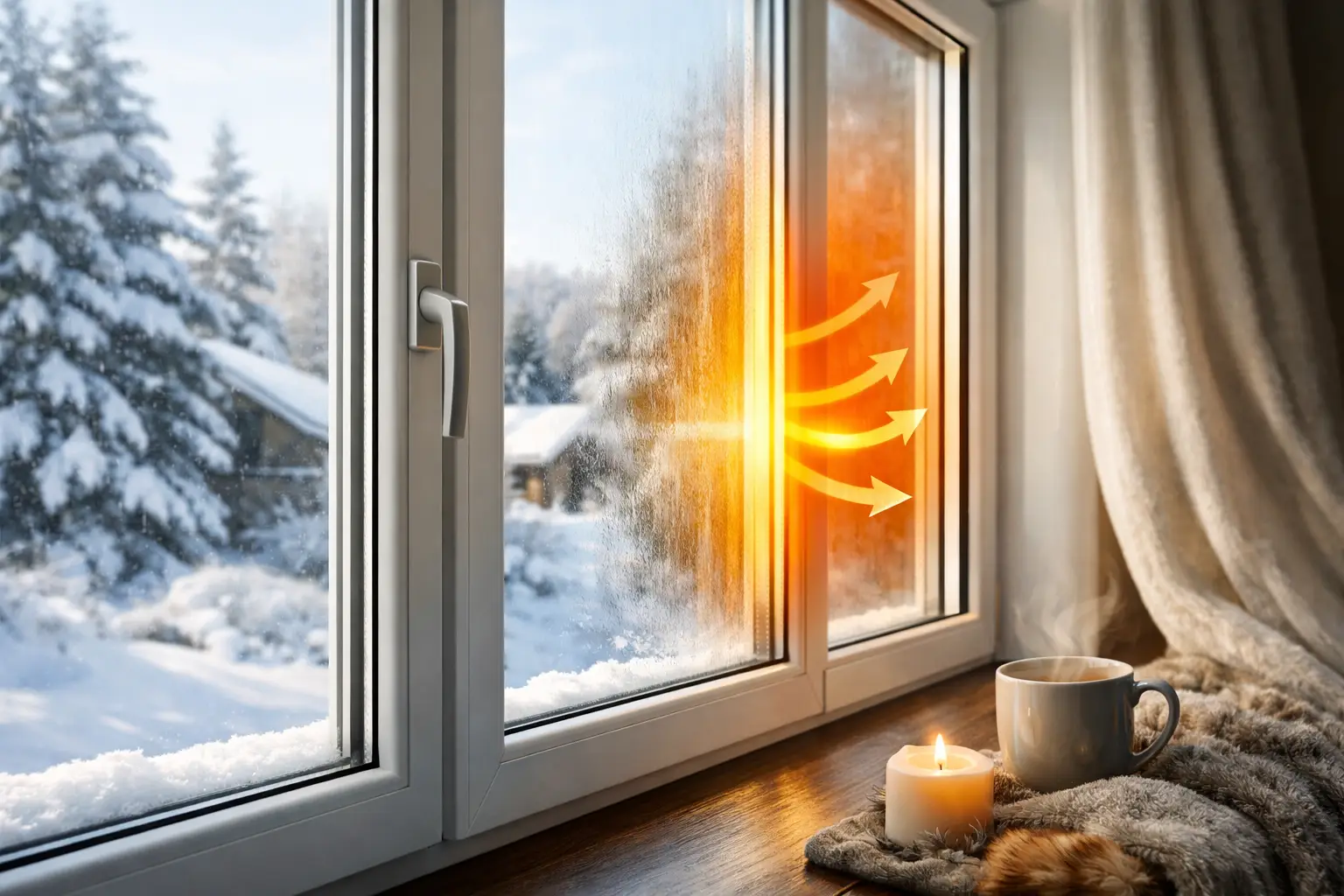
Condensation on the interior side of a window is not always proof that the window has failed. It occurs when warm, humid indoor air reaches a surface cold enough for moisture to form. Older windows often make the problem worse because interior glass becomes very cold during winter.
Better-insulated windows raise the interior glass temperature and reduce the risk, but household humidity still matters. Cooking, showers, humidifiers, and inadequate ventilation can create enough moisture to fog even efficient glass during severe cold. Use bath and kitchen exhaust fans, avoid overusing humidifiers, and keep blinds or curtains open occasionally so warm room air can circulate across the glass.
Condensation between panes is different. It usually indicates a failed insulated glass seal and should be evaluated for repair or replacement.
Know When Replacement Is Worth It
A window replacement deserves consideration when you have repeated drafts, rising comfort complaints, sticking sashes, visible frame deterioration, water stains around trim, or single-pane glass. A homeowner may also replace windows to improve the look of an aging exterior, reduce outside noise, or prepare for siding work.
There is no need to replace every window solely because it is old. Well-maintained windows may still have years of service left. But when several windows show the same problems, a planned replacement can provide better results than repeated small repairs. It also gives you the chance to select consistent styles, colors, and performance levels for the whole home.
For Des Moines homeowners, the best choice is a window system that fits the house and the weather it faces, not simply the option with the highest advertised rating. Guardian Roofing can help homeowners evaluate window upgrades alongside roofing, siding, and gutter needs, so each part of the exterior works toward the same goal: dependable protection through every season.