
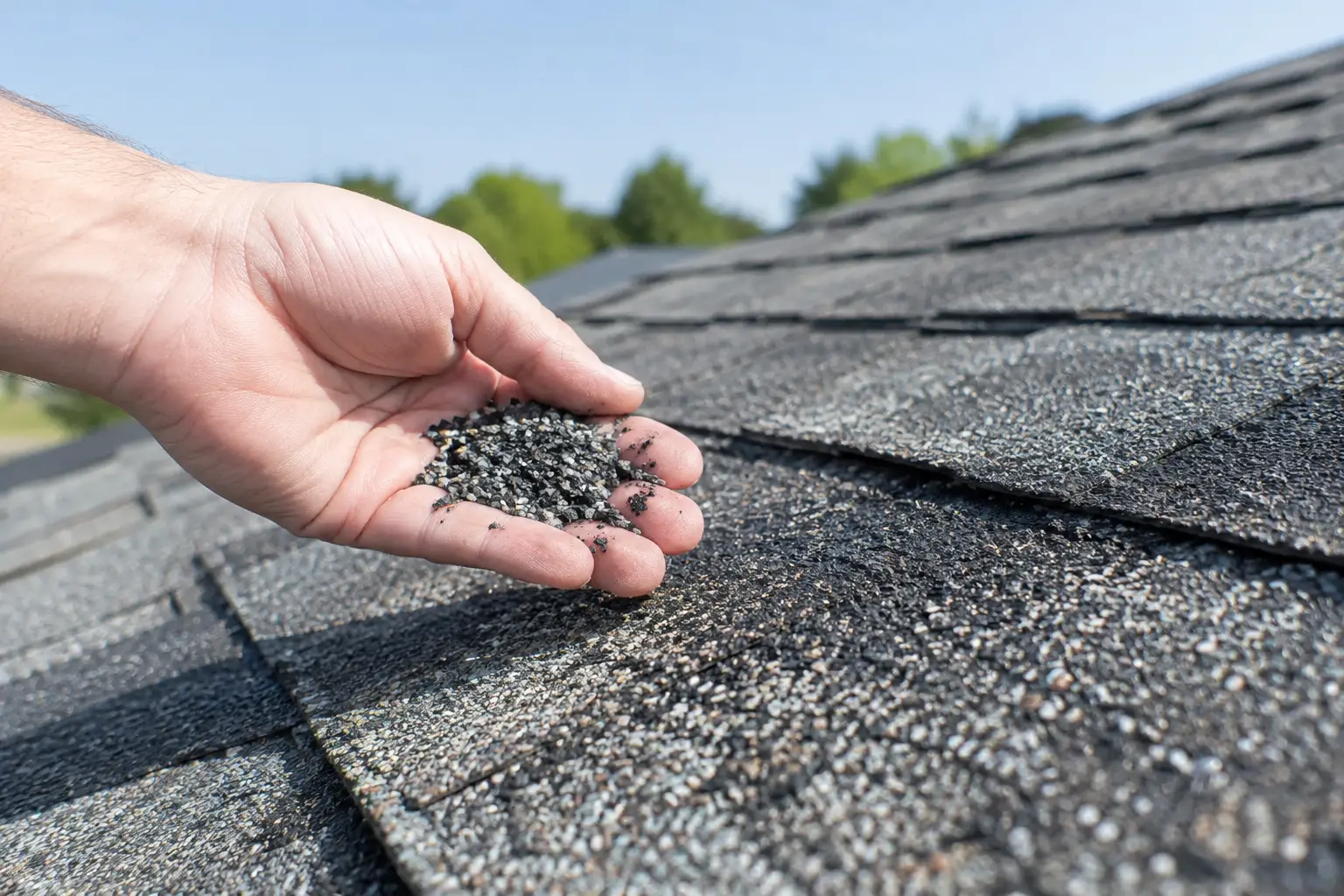
A handful of loose, sand-like particles in a gutter may not look urgent, but roof granule loss can be an early clue about the condition of your shingles. Those small mineral granules are part of your roof’s protective surface. When they begin to wash away in significant amounts, the shingles beneath them can become more exposed to sunlight, rain, wind, and changing Iowa temperatures.
For Des Moines homeowners, the right response depends on what is causing the loss, how old the roof is, and whether other warning signs are present. Some shedding is expected. Other cases deserve a professional inspection before a manageable concern becomes a leak, interior damage, or an unexpected replacement.
What Roof Granules Do for Your Home
Asphalt shingles are built in layers. The visible outer layer is coated with mineral granules that give shingles their color and texture, but appearance is only part of their job. Granules help shield the asphalt portion of a shingle from ultraviolet light, add fire resistance, and help the roof surface stand up to everyday weather exposure.
When enough granules are gone, shingles can look patchy, dark, or bare in spots. The asphalt coating beneath may dry out more quickly under direct sun. Over time, that can contribute to cracking, curling, and a shorter useful life for the roof.
Granules also play a practical role during Midwest storms. A roof that is already worn may be more vulnerable when high winds, hail, heavy rain, snow, and freeze-thaw cycles arrive. That does not mean every granule in a downspout points to a failing roof. It does mean the material deserves context.
When Granule Loss Is Normal
New asphalt shingles commonly shed a small amount of excess granules. This can happen after installation and may be noticeable in gutters following the first heavy rains. Manufacturers apply more granules than the shingle needs so the surface remains properly covered after handling, installation, and early weather exposure.
A small, occasional amount of grit in a gutter can also occur as an asphalt roof ages. If the shingles still have consistent color, intact edges, and no visible bare patches, isolated granules alone may not require immediate work.
The key difference is volume and pattern. A light scattering of granules is different from thick deposits that return quickly after gutters are cleaned. It is also different from areas where many shingles appear smooth, darker than surrounding sections, or visibly worn. Homeowners should look at the whole roof condition rather than trying to diagnose the issue from one handful of gutter debris.
Signs Roof Granule Loss Needs Attention
Granule loss becomes more concerning when it appears alongside physical damage or an aging roofing system. From the ground, look for uneven color across roof slopes, bald-looking spots, exposed dark asphalt, curled shingle corners, cracking, or shingles that seem loose after wind.
Check gutters and downspout outlets as well. A concentrated buildup that resembles coarse sand may indicate more than routine shedding, especially if it appears repeatedly. Avoid climbing onto the roof to investigate. Walking on older shingles can cause additional damage, and a roof surface may be unsafe even when it looks dry.
Inside the home, watch for water stains on ceilings, damp attic insulation, peeling paint near upper walls, or a musty odor after rain. These symptoms do not prove that granule loss caused a leak, but they strengthen the case for an inspection. A roofing professional can assess the shingles, flashing, ventilation, roof decking, and drainage areas together.
Hail, Wind, and Storm-Related Damage
Hail can dislodge granules by striking shingles with enough force to bruise or fracture the surface. The resulting marks are not always obvious from the ground. Wind can lift shingle edges, weaken adhesive seals, or pull at shingles that have already become brittle with age.
Storm damage is not always dramatic. A roof may remain watertight immediately after a storm while underlying wear continues to develop. That is why a timely inspection after a major hail or wind event is a sensible protective step, particularly for roofs that are already well into their expected service life.
Tree branches can create a similar problem. A branch rubbing across a roof during high winds can scrape granules from the surface. Keeping limbs trimmed back from the home helps reduce abrasion, moisture buildup, and the chance of more serious impact damage.
Age, Heat, and Poor Ventilation
Asphalt shingles naturally become less flexible as they age. In Iowa, summer heat and winter cold put repeated stress on that material. Expansion, contraction, sun exposure, and ice can all accelerate wear over many seasons.
Attic ventilation matters, too. Excess heat trapped beneath the roof can raise shingle temperatures and contribute to premature aging. Moisture trapped in an attic can create its own set of concerns for insulation, decking, and indoor comfort. A proper roof evaluation should consider ventilation and attic conditions, not just the visible shingle surface.
Repair or Replacement: How to Decide
A repair can be the right answer when granule loss is limited to a small, identifiable area and the rest of the roof remains in good condition. For example, a few damaged shingles after a branch strike may be replaceable if a suitable match is available and surrounding shingles still have years of service left.
Replacement often makes better long-term sense when granule loss is widespread, shingles are brittle or curling, leaks have appeared, or the roof is near the end of its expected lifespan. Patching isolated areas on an extensively worn roof can delay the larger decision, but it may not restore dependable whole-home protection.
Material choice also matters. Dual-layer asphalt shingles provide a familiar appearance with enhanced dimensional style and a broad selection of colors. For homeowners seeking a longer-lasting exterior investment, stone-coated steel roofing offers a different level of durability while maintaining architectural curb appeal. The best option depends on the home, the homeowner’s priorities, and the level of long-term performance desired.
A clear inspection should explain the condition of the existing roof, identify any active concerns, and outline practical options without pressure. Homeowners deserve to understand whether they are looking at routine maintenance, targeted repair, or a replacement that will better protect the property for years ahead.
What You Can Do Now
Start with safe, simple observations after a rainstorm or seasonal gutter cleaning. Note whether granules are appearing occasionally or accumulating heavily. Take photos of visible discoloration, shingle damage, ceiling stains, and gutter debris so changes can be tracked over time.
Keep gutters clear so water can move away from the roof edge as intended. Clogged gutters can hold moisture against roofing materials and make it harder to see what is actually washing off the roof. Also make sure downspouts direct water away from the foundation, since a roof system protects more than the shingles alone.
Do not rely on a coating or quick fix to solve widespread granule loss. Once a shingle’s protective surface has significantly worn away, the underlying issue is material deterioration. A careful evaluation is more valuable than spending money on a temporary treatment that does not address the roof’s remaining life.
Guardian Roofing helps homeowners assess roofing concerns with the larger picture in mind: weather protection, curb appeal, budget, and lasting value. A free quote can provide clarity on the condition of your roof and the options that fit your home.
If you are seeing repeated granule buildup, patchy shingles, or storm-related changes, acting before the next severe weather season can help protect the home you have worked hard to maintain.