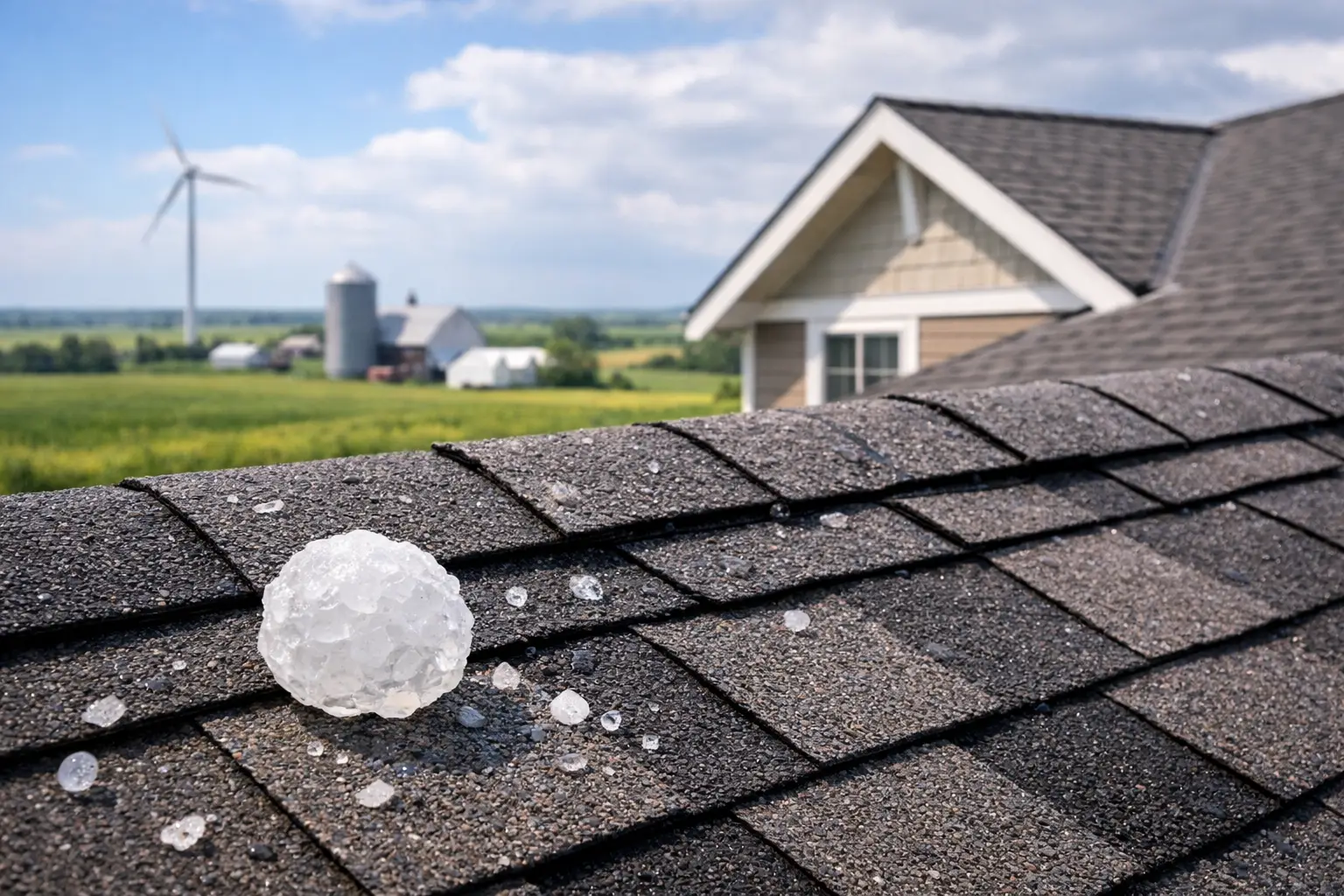
A hailstorm can leave a roof looking nearly unchanged from the driveway while bruising shingles, loosening protective granules, and shortening its useful life. That is why an impact resistant shingles review should look beyond a product label. For Des Moines homeowners, the real question is whether the shingle can provide worthwhile protection through repeated Midwest weather events and whether it makes sense for the home, budget, and long-term plans.
Impact-resistant asphalt shingles are designed to better withstand hail strikes than standard shingles. They can be a practical upgrade for homeowners replacing an aging roof, addressing storm damage, or planning to stay in their home for years. They are not indestructible, and they are not the right answer for every property. A careful decision starts with understanding what the rating means and what it does not.
What Makes a Shingle Impact Resistant?
Most homeowners will encounter impact ratings identified as Class 1 through Class 4. Class 4 is the highest commonly available rating under the UL 2218 test standard. In that laboratory test, a steel ball is dropped onto the roofing material at specific locations to evaluate whether the product cracks or fractures.
A Class 4 shingle has passed the most demanding level of that test. Manufacturers achieve this performance in different ways, often by using a reinforced backing, a modified asphalt formulation, or both. The construction helps the shingle flex under impact rather than crack as easily as a conventional asphalt shingle might.
That rating is useful, but it should be viewed accurately. It does not mean a roof will never be damaged by hail. Large stones, wind-driven debris, aging materials, poor attic ventilation, and prior wear can all affect real-world performance. The rating also does not measure every potential problem after a storm, such as lifted tabs, damaged flashing, or dented gutters.
For Iowa homes, the advantage is not a promise of a damage-free roof. It is added resistance during the kind of hail events that can make a standard roof vulnerable to cracking and granule loss.
Impact Resistant Shingles Review: Where They Deliver Value
The strongest case for impact-resistant shingles is often long-term resilience. Des Moines homes face more than occasional hail. They also experience high winds, heavy rain, snow loads, summer heat, and sharp temperature shifts. A roof system that better handles one major threat can help protect the broader investment homeowners have made in their exterior.
A quality impact-resistant shingle can offer several meaningful benefits. First, it may reduce the chance of certain hail-related damage during moderate storms. Second, it can provide peace of mind for homeowners who have already experienced the disruption of an insurance claim, temporary repairs, and an unexpected replacement decision. Third, Class 4 roofing may qualify for a homeowners insurance discount with some carriers.
Insurance savings deserve a realistic conversation. Discounts vary by insurance company, policy, location, and verification requirements. Some carriers offer meaningful premium credits for a documented Class 4 roof, while others offer little or no reduction. Before selecting a material based on potential savings, ask your insurer what documentation is required and how long the discount applies. A roofing contractor can help identify the product information you may need, but the carrier makes the final decision.
Curb appeal matters, too. Homeowners no longer need to choose between a stronger roof and an attractive one. Impact-resistant asphalt shingles are available in dimensional styles and colors that complement traditional Iowa homes, newer construction, and homes with stone, brick, or siding accents. A roof replacement should protect the house while improving how it looks from the street.
The Trade-Offs to Consider Before You Upgrade
Impact-resistant shingles typically cost more than comparable standard architectural shingles. The added material technology is part of that difference. Whether the upgrade is worth it depends on local storm exposure, the roof’s size and complexity, insurance considerations, and how long the homeowner expects to own the property.
For a homeowner in an area with recurring hail claims, the premium can be easier to justify. For someone selling soon, the decision may center more on market appeal, the roof’s appearance, and the confidence a new, high-performing system gives a buyer. There is no single answer that fits every home.
It is also worth separating impact resistance from wind resistance. These are related but different performance characteristics. A shingle may be built to resist hail impact, but wind performance depends heavily on the complete roofing system: correct fastening, starter shingles, underlayment, ventilation, flashing, and installation practices. The best shingle cannot overcome shortcuts beneath it.
Color can be another consideration. Darker colors may show some blemishes or granule changes differently than lighter blends, although the right choice usually comes down to the home’s design and the homeowner’s preference. A qualified contractor can show samples in natural light and explain which options fit the home’s exterior.
A Roof System Matters More Than One Product
A shingle is only one layer of protection. Underlayment helps manage water that gets past the outer surface. Ice and water protection is particularly important in vulnerable areas, such as eaves, valleys, and roof penetrations. Proper flashing directs water away from chimneys, walls, skylights, and vents. Balanced attic ventilation helps control heat and moisture that can age roofing materials prematurely.
This is where installation experience matters. A roof may carry an excellent Class 4 rating on paper, but long-term performance depends on careful preparation and workmanship. Before signing a contract, homeowners should ask how the existing roof deck will be evaluated, what underlayment will be installed, how flashing will be handled, and how ventilation will be assessed.
They should also ask whether the proposed shingle is truly impact rated in the color and product line being quoted. Ratings can vary by manufacturer and product, so the exact material should be confirmed rather than assumed.
When Steel Roofing May Be the Better Fit
Impact-resistant shingles are a strong option for many homeowners, especially those who prefer the familiar appearance and value of asphalt roofing. But they are not the only durable choice for severe weather.
Stone-coated steel roofing can be worth considering when a homeowner wants a longer-term material with a distinctive profile and high resistance to hail, wind, and fire exposure. It is available in designs that resemble shingles, shake, tile, and other architectural styles, making it a practical option for homeowners who want premium durability without a purely industrial appearance.
The trade-off is a higher initial investment. The right choice comes down to priorities. A Class 4 asphalt shingle may be the sensible balance of performance, appearance, and cost for one household. A stone-coated steel system may better fit another homeowner’s plans for lifetime-oriented protection and a more distinctive exterior.
Questions to Ask During a Roofing Estimate
A clear estimate should help you compare systems, not leave you guessing. Ask whether the proposed shingle carries a Class 4 UL 2218 rating, what manufacturer warranty applies, and what installation warranty is included. Confirm the full scope of work, including tear-off, decking repairs if needed, underlayment, ice and water protection, ventilation, flashing, cleanup, and disposal.
It is also smart to ask how the contractor will document the completed roof for your insurance carrier. Keep copies of the signed contract, product information, warranty documents, and final invoice. Those records can be useful if you later seek an insurance discount or need to document the roof after a storm.
Guardian Roofing helps homeowners evaluate these choices in practical terms: how the roof will perform, how it will look, and what level of investment best supports the home over time. A free, detailed quote can turn broad product claims into a recommendation built around your roof’s condition and your goals.
A stronger roof begins with an honest assessment, not a one-size-fits-all upgrade. If hail exposure, long-term ownership, and added protection are high priorities, impact-resistant shingles deserve a close look. If the roof has recently been through a storm, arrange a professional inspection before assuming that a clean-looking surface means everything underneath is still sound.