A roof covers a large share of your home’s visible exterior, so its color can either bring every element together or make a well-kept home feel disconnected. Knowing how to choose roof color starts with more than picking a shade you like. In Des Moines, the right choice should complement your home’s architecture, work with permanent exterior finishes, and continue looking good through bright summers, gray winters, rain, wind, and snow.
A roof replacement is a long-term investment. Choose a color with the same care you would give the roofing material and installation, because it will shape your home’s curb appeal for decades.
Start With the Colors You Cannot Easily Change
Your roof color should coordinate with the exterior features that are hardest or most expensive to replace. Brick, stone, siding, stucco, trim, windows, and driveway tones all influence which roofing colors will look at home on the property.
Begin by identifying the undertones in your exterior. Red brick often carries warm notes of rust, orange, or brown. Gray stone may lean cool blue-gray or warm taupe. White siding can be crisp and cool or creamy and warm. A roof that clashes with those undertones can look out of place even when both colors are attractive on their own.
For homes with warm brick, beige siding, tan stone, or natural wood accents, brown, weathered wood, warm gray, and charcoal-brown roof colors are often dependable choices. Homes with cool gray siding, blue accents, black windows, or slate-toned stone commonly pair well with charcoal, black, or cooler gray roofing.
When an exterior combines several materials, look for the color that visually connects them. A roof does not need to match every surface. It needs to provide a confident, balanced backdrop for the whole home.
Consider Your Home’s Architectural Style
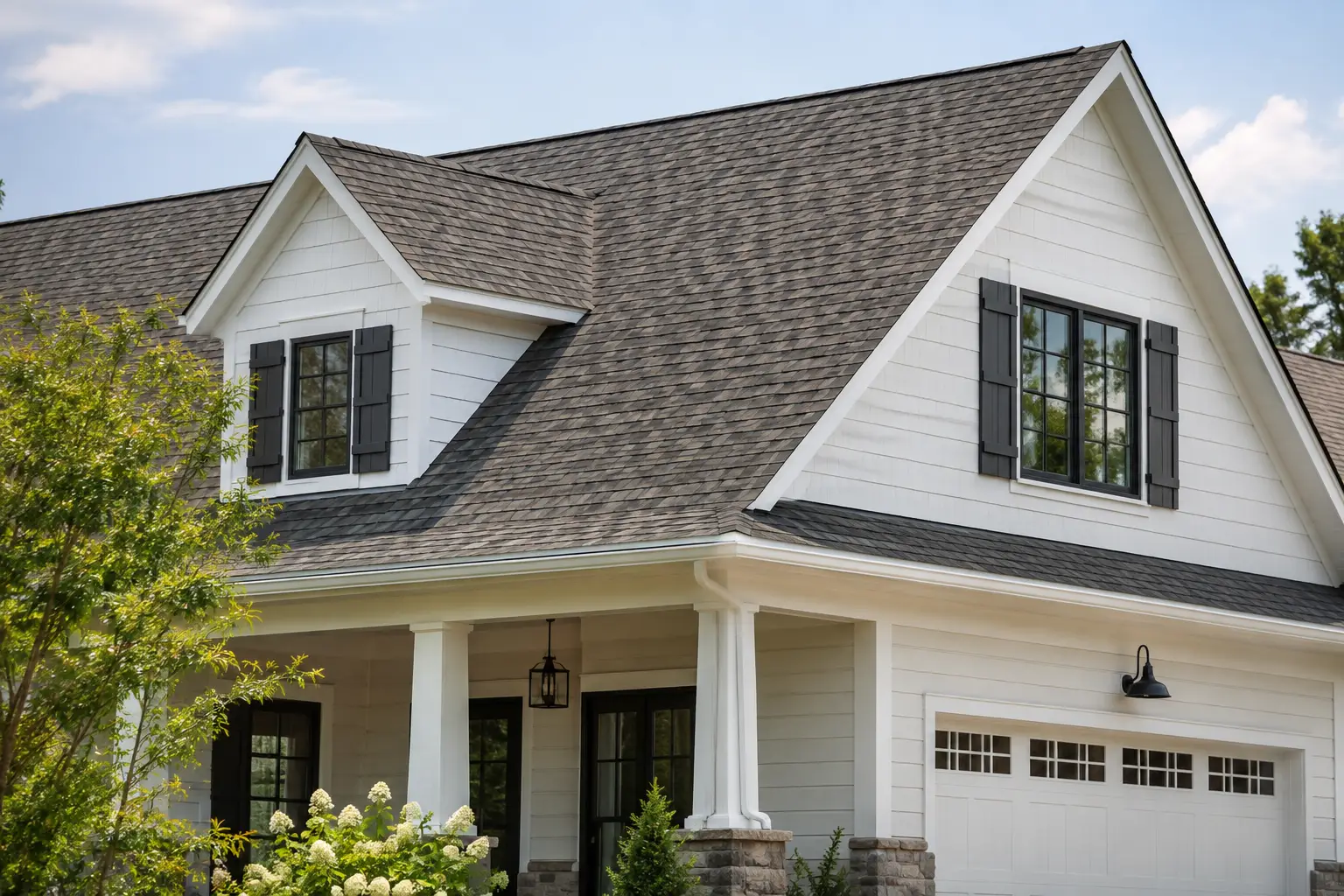
Roof color can reinforce the character of a home or work against it. Traditional Colonials, ranch homes, and many Craftsman-style properties often look balanced with dimensional brown, gray, or black roofing. Farmhouse-inspired exteriors can carry a black roof especially well when paired with white siding and dark trim, though a softer charcoal may create a less dramatic look.
A larger home with multiple roof planes can support a deeper, more defined color because it adds structure and contrast. On a smaller home, an extremely dark roof may feel visually heavy, particularly if the siding is also dark. A mid-tone gray or brown can provide distinction without overwhelming the facade.
Architectural details matter, too. A home with prominent dormers, gables, stone columns, or decorative trim often benefits from a roof color that lets those features stand out. If the exterior is simple and modern, a bold charcoal or black roof can create the clean contrast that gives the design its presence.
Look at Samples Outside and at Different Times of Day
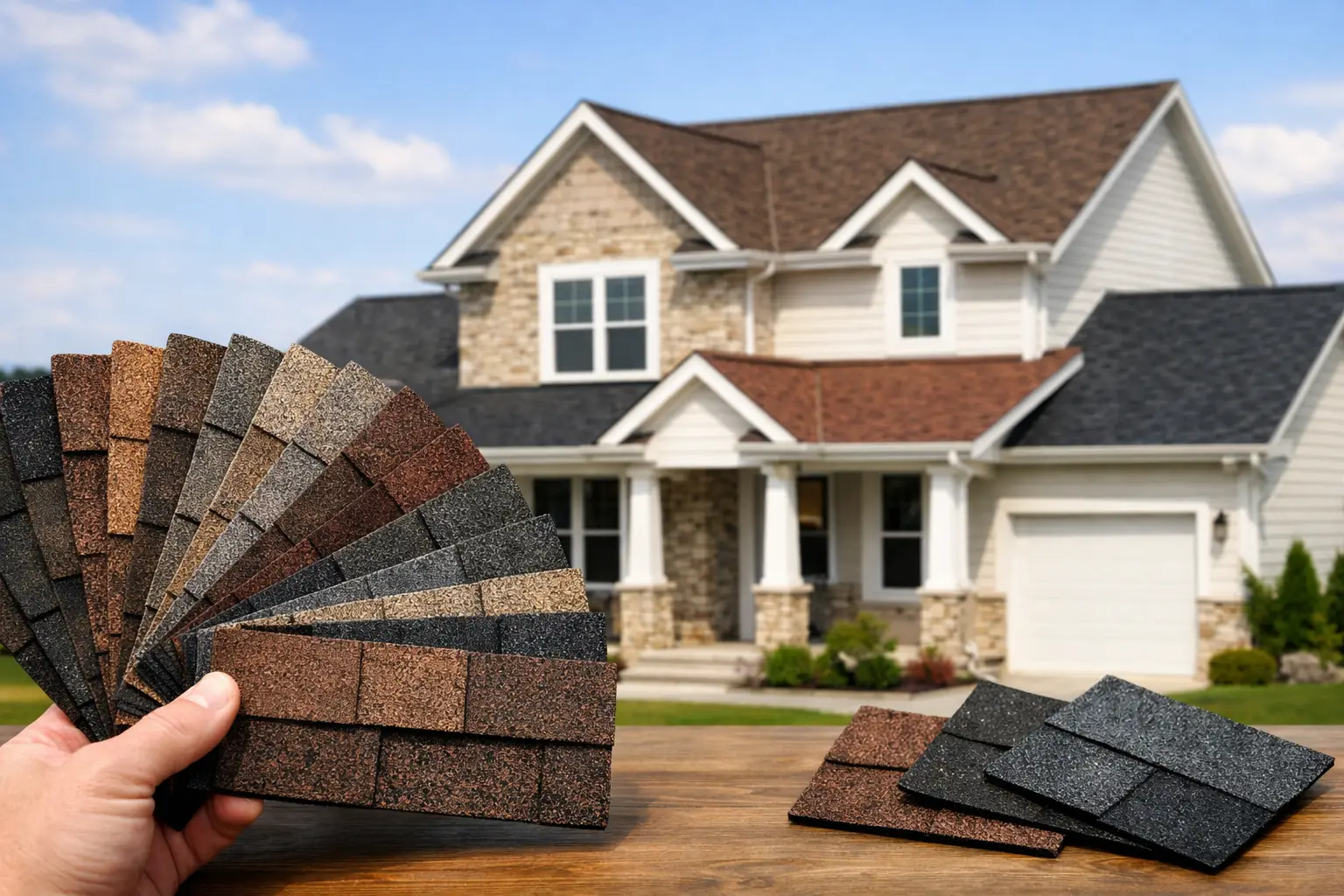
A roofing sample viewed under showroom lighting is only a starting point. Natural sunlight changes how color appears, and the effect can be significant. A gray shingle may reveal blue undertones in the morning, look nearly charcoal at noon, and appear warmer under late-day light.
Take color samples outside and hold them near the siding, brick, trim, and gutters. Step back to view them from the street, not just from a few feet away. Roofs are seen at a distance, where contrast and overall tone matter more than small details in a sample.
Cloud cover also deserves consideration in Central Iowa. A shade that looks light and warm on a sunny day may look much darker during a long stretch of overcast weather. If you are choosing between two colors, consider which one you will be comfortable seeing in both conditions.
Use Contrast With Purpose
Contrast gives a home definition. A dark roof paired with light siding is a classic example because it frames the home and draws attention to its lines. A lighter roof with darker siding can be equally attractive, though it often creates a softer, more blended appearance.
The goal is not always maximum contrast. A low-contrast palette can make a home feel larger and more cohesive, especially when siding, stone, and roofing share similar warm or cool undertones. High contrast can create a sharper, more current look, but it also makes trim lines and exterior details more noticeable.
Think about the result you want from the street. Do you want your home to feel traditional and understated, or crisp and dramatic? There is no single best roof color, but the color should be intentional rather than an afterthought.
Factor in Iowa Weather and Practical Maintenance
Roof color alone does not determine whether a roofing system will stand up to severe weather. Material quality, installation, ventilation, and the complete roof system have a much greater effect on long-term performance. Still, color can influence the way a roof looks over time and how it absorbs heat.
Darker roofs generally absorb more solar heat than lighter ones. In Iowa’s climate, that difference may be worth discussing as part of a broader conversation about attic ventilation, insulation, and energy use. It is rarely a reason to choose a color that does not suit the home, but it can help break a close decision.
Maintenance expectations also matter. Very light colors can make algae streaks, leaf staining, and debris more visible. Very dark colors can show dust, pollen, and fading more readily in certain settings. Mid-tone blends often hide everyday variation well, which is one reason they remain a popular option for busy homeowners.
If mature trees surround your property, consider the shade, falling leaves, and organic debris your roof sees each year. A color that works beautifully on an open lot may require a different maintenance routine beneath a dense tree canopy.
Match the Color to the Roofing Material
The material you choose affects the color palette, texture, and visual depth available for your roof. Dual-layer asphalt shingles offer broad color options and dimensional blends that can mimic the variation found in natural materials. They are a practical fit for homeowners who want dependable protection and flexible design choices.
Stone-coated steel roofing provides a different visual character. Its architectural profiles can create the appearance of shake, tile, shingle, or slate while delivering the strength of steel. Because profile, texture, and color work together, the best choice is not simply the darkest or lightest sample. It is the combination that supports your home’s architecture and your expectations for long-term performance.
A roofing professional can help you compare full-size samples and actual installed examples where available. This is particularly helpful when choosing between colors with subtle differences, such as charcoal versus weathered gray or brown versus bronze.
Do Not Choose Based Only on Nearby Homes
Neighborhood context is useful, but it should not dictate every decision. Look around your street to understand the prevailing roof colors and exterior styles. A choice that is wildly different from surrounding homes may affect how cohesive the property feels, especially in a planned neighborhood.
At the same time, choosing a roof identical to every nearby home is not required. A complementary color can help your home stand out in a polished way. The best approach is usually to respect the neighborhood’s overall character while selecting a color that fits your specific siding, masonry, trim, and style.
If you belong to a homeowners association, confirm any approved color requirements before finalizing your selection. This step can prevent delays after you have already chosen a material and scheduled your project.
How to Choose Roof Color With Confidence
Before making your final decision, narrow your choices to two or three colors that coordinate with the fixed elements of your home. View each one outdoors in sun and shade, from close range and from the street. Then consider the complete exterior, including gutters, siding, window trim, and any future updates you expect to make.
Avoid chasing a short-lived trend if it does not feel right for your home. A roof is not a seasonal paint color. The most successful choices are attractive now, practical to live with, and appropriate for the home’s architecture years from now.
Guardian Roofing helps homeowners evaluate roofing colors alongside material options, weather protection, and the exterior details that make a property feel complete. A thoughtful color consultation can turn an uncertain choice into one you feel good about every time you pull into the driveway.
Your home does not need the most dramatic roof on the block. It needs a roof color that protects its value, fits its character, and gives you lasting confidence through every Iowa season.