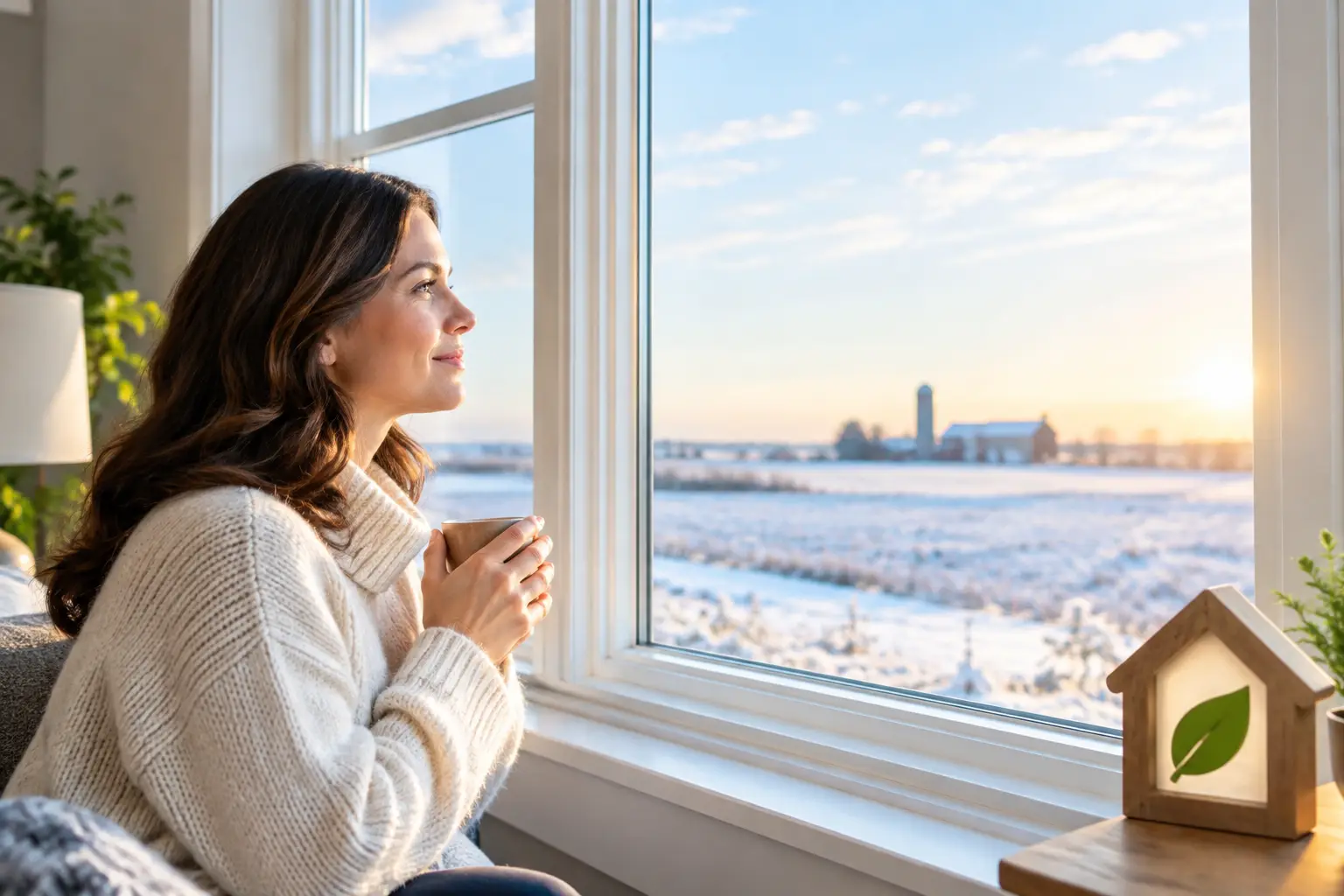
A cold draft along the living-room floor, frost forming near the glass, or a room that turns uncomfortably hot each summer afternoon can make a home feel harder to heat and cool than it should. Window replacement energy savings can help address those problems, but the biggest benefit is often the comfort homeowners feel every day – fewer cold spots, less glare, and more consistent temperatures from room to room.
For Des Moines homeowners, windows work through real weather extremes. They face winter wind, below-freezing temperatures, spring rain, humid summers, and intense sun. Replacing aging or poorly performing windows can reduce the strain on a home’s heating and cooling equipment while improving the protection and appearance of the exterior.
How Window Replacement Energy Savings Work
Windows lose and gain heat in several ways. Heat can pass through the glass and frame, air can leak around moving parts or gaps in the installation, and sunlight can warm interior spaces through the glass. A replacement window is designed to manage each of these issues more effectively than an older single-pane window or a unit with worn seals.
Modern energy-efficient windows typically use insulated glass units with two or three panes, low-emissivity coatings, and insulating gas between the panes. Low-E coatings reflect certain heat energy while still allowing useful natural light into the home. In winter, that helps keep indoor heat inside. In summer, it can limit the amount of solar heat entering a room.
The frame matters as well. Vinyl, fiberglass, composite, and wood-clad options can all perform differently depending on their construction and installation. A well-built window with a poor fit will not deliver the results a homeowner expects. Proper flashing, air sealing, insulation around the opening, and exterior trim are all part of protecting the home from drafts and moisture.
Lower Heat Loss During Iowa Winters
Older windows can make the furnace run longer because the glass and frames feel cold, and outside air may find its way indoors. Replacement windows with a lower U-factor slow the rate of heat transfer. Lower numbers generally indicate better insulating performance.
That does not mean every home needs the same window package. A shaded north-facing window has different needs than a large west-facing picture window exposed to late-day summer sun. The right recommendation accounts for window location, home design, existing wall conditions, and the homeowner’s priorities for comfort, appearance, and budget.
Less Solar Heat in Summer
During a humid Iowa summer, sunlight pouring through older glass can make certain rooms feel several degrees warmer than the rest of the house. Solar heat gain coefficient, often called SHGC, measures how much solar heat passes through a window. A lower SHGC can reduce unwanted summer heat gain, particularly on sunny south- and west-facing elevations.
There is a trade-off. Extremely low solar heat gain may not be ideal in every location, because some winter sunlight can be beneficial. Homeowners should consider the direction each window faces rather than choosing based on one rating alone. The goal is balanced performance throughout the year, not simply the lowest number on a label.
What Savings Can Homeowners Realistically Expect?
Energy savings vary widely. A home with original single-pane windows, loose frames, and visible air leakage has more opportunity for improvement than a home with newer double-pane units that are still in good condition. Window replacement can also make a bigger difference when the home’s attic insulation, exterior doors, and HVAC system are performing well enough to support the upgrade.
It is best to view window replacement as a whole-home investment rather than a guaranteed utility-bill shortcut. Bills are influenced by thermostat settings, energy prices, home size, insulation levels, ductwork, shading, occupancy, and the severity of the weather. A contractor who promises a precise dollar amount without evaluating the property is oversimplifying the decision.
Even when monthly utility savings are gradual, the practical benefits can be immediate. Rooms near windows may become easier to use in January and July. Drafts can decline. Condensation problems may improve when moisture is caused by cold interior glass surfaces. New windows can also reduce outside noise and refresh a home’s curb appeal.
The Installation Is Part of the Energy Performance
A premium window is only as effective as the installation behind it. The existing opening must be inspected for water damage, rot, improper flashing, and gaps that can allow air and moisture into the wall. Simply placing a new unit into a problem opening can hide an issue instead of resolving it.
Professional installation should create a continuous line of defense around the window. That includes a secure fit, properly placed flashing to direct water outward, insulation that does not distort the frame, and careful air sealing. Interior and exterior finishing should protect the opening while preserving the home’s appearance.
This detail is especially valuable in central Iowa, where wind-driven rain, snow, and freeze-thaw cycles test exterior components year after year. Windows are not separate from the rest of the house. Their performance connects to siding, trim, gutters, roof drainage, and the condition of the surrounding wall.
Signs Replacement May Be Worth Considering
Some window concerns are visible, while others show up in daily comfort. Windows may be nearing replacement if they are difficult to open or lock, show persistent condensation between panes, have peeling or damaged frames, or allow noticeable drafts. Fading furniture and flooring near sunny windows can also point to limited protection from ultraviolet light.
A broken seal in insulated glass often creates fogging between panes. In some cases, glass repair may be possible. However, if multiple windows have failed seals, frames are deteriorating, or air leakage is widespread, replacement may provide better long-term value than repeated repairs.
Choosing Windows That Fit the Home
The best replacement windows should complement both the architecture and the way a family uses the home. A double-hung style may suit a traditional home and allow flexible ventilation. Casement windows can provide a tight seal when closed and work well where easy operation matters. Picture windows maximize the view and daylight but do not open, so they are often paired with operable windows nearby.
Color, grille patterns, frame profile, and trim details deserve attention alongside efficiency ratings. An exterior upgrade should strengthen curb appeal rather than look out of place. Homeowners also benefit from selecting windows that are practical to clean, operate, and maintain for years to come.
It is wise to compare written product information, warranty coverage, glass options, and installation scope. Ask whether rotten trim or damaged framing will be addressed if discovered, how the exterior will be sealed, and what cleanup looks like after the work is complete. Clear answers help prevent surprises and protect the investment.
A Coordinated Exterior Plan Delivers More Value
Window work can be a good time to evaluate the surrounding exterior. Worn siding may allow moisture into wall areas near window openings. Clogged or undersized gutters can send water over trim and foundation areas. A roof with aging flashing or poor drainage can contribute to problems that appear around windows but begin higher on the home.
Guardian Roofing helps homeowners consider windows as part of a coordinated exterior plan, with recommendations based on the property rather than a one-size-fits-all sales pitch. Addressing connected issues at the right time can reduce disruption, preserve exterior finishes, and give the home a more complete line of protection against Midwest weather.
A replacement window project should leave a home feeling quieter, steadier, and better protected in every season. Start with the rooms that cause the most discomfort, ask for a careful evaluation of the openings and surrounding exterior, and choose an installation approach built to perform long after the first utility bill arrives.