A new roof changes more than the line at the top of your home. It can make brick look warmer, siding look cleaner, and an older exterior feel more intentional. With so many asphalt shingle color options available, the right choice should complement your home while delivering the dependable weather protection Iowa homeowners need.
Color is worth considering early in the replacement process. A roof covers a large portion of what people see from the street, and you may live with that decision for decades. The best color is not simply the trendiest sample in a showroom. It is the one that fits your home, works with its fixed exterior features, and gives you confidence every time you pull into the driveway.
Start With the Features You Cannot Easily Change
Your roof should work with the exterior materials that are staying in place. Brick, stone, trim, siding, windows, gutters, and garage doors all influence which shingle color will look right. Since a roof replacement often lasts longer than a paint color or a front-door update, begin with the most permanent elements first.
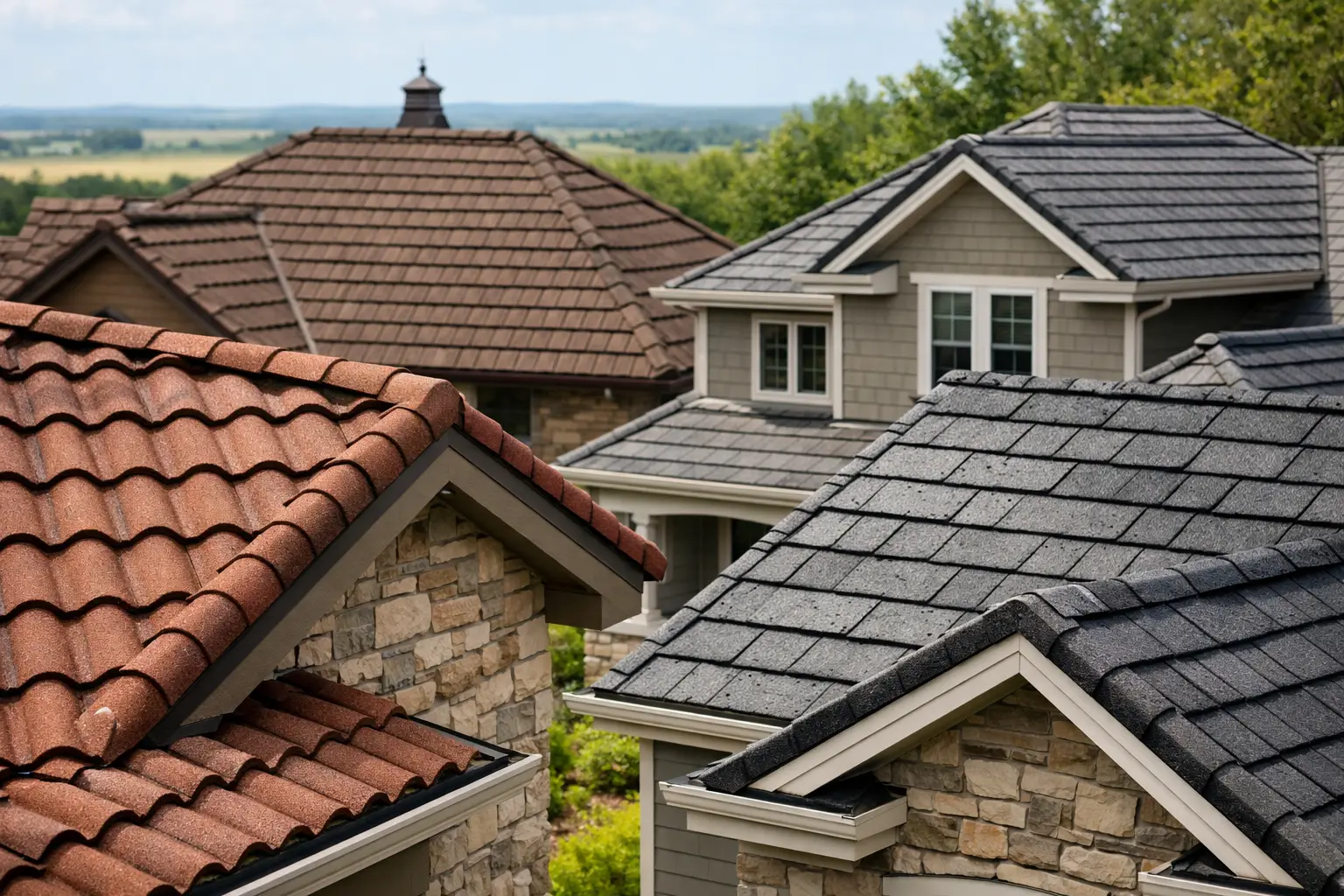
A home with warm red brick often pairs well with brown, weathered wood, charcoal-brown, or warm gray shingles. Cool-toned stone and light gray siding can look especially sharp with charcoal, black, or blended gray roofing. For beige, tan, and cream exteriors, brown and medium-gray shingles are usually safe, versatile choices.
Look for the undertones, not just the main color. A gray shingle may contain blue, brown, or green flecks. A black shingle may read as soft charcoal in sunlight. Those subtle blends can make a roof feel connected to the rest of the house rather than separate from it.
Asphalt Shingle Color Options by Exterior Style
There is no single best roof color for every Des Moines home. Architecture, lot setting, and exterior materials all matter. Still, a few color families consistently offer practical results.
Black and Charcoal
Black and charcoal shingles create definition. They can make a light-colored home look crisp and give traditional, farmhouse, colonial, and contemporary exteriors a stronger profile. Charcoal is often more forgiving than a pure black because its blended tones add visual depth without appearing too severe.
The trade-off is heat. Darker roofs absorb more solar heat than lighter roofs, which can contribute to warmer attic conditions during Iowa summers. Proper attic ventilation and insulation remain essential regardless of shingle color, but homeowners who prefer a dark roof should make sure those parts of the roofing system are addressed during installation.
Gray and Weathered Blends
Gray is one of the most flexible choices for Iowa homes. Light gray can soften a darker brick or siding color, while medium and weathered gray blends work well with white, blue, green, and greige exteriors. These shingles also tend to hide dust, pollen, and minor color variation well.
A blended gray roof is particularly helpful when a home has several exterior colors. Instead of competing with the brick, shutters, trim, and siding, it can bridge them together. This makes gray a practical choice for homeowners who may update paint or accent colors later.
Brown, Tan, and Warm Neutrals
Brown shingles bring a grounded, traditional appearance to homes with brick, stone, natural wood accents, beige siding, or warm trim. They are especially well suited to craftsman-style homes and properties with mature trees or more natural landscaping.
Warm neutrals can be easier to coordinate than very dark or very light colors, but pay attention to contrast. A medium-brown roof on a medium-tan house may look flat from the street. Choosing a shingle with darker shadow lines or mixed tones can create the separation the exterior needs.
Blue, Green, and Other Distinctive Blends
Some asphalt shingles include blue-gray, green-gray, or other subtle color blends. These can add character without making the roof feel overly bold. A blue-gray roof may complement white siding and black trim, while a muted green-gray can work beautifully with cream siding, stone, and wooded surroundings.
Distinctive colors deserve extra care. View a full-size sample outside at different times of day before making a final decision. A tone that looks balanced indoors may look much stronger under direct sun or against your siding.
Consider Iowa Weather, but Keep Color in Perspective
Des Moines homeowners need roofing systems that stand up to wind, rain, hail, snow, ice, and wide temperature swings. Shingle color affects appearance and can influence how much heat a roof absorbs, but it is only one part of long-term performance.
A lighter roof may reflect more sunlight, while a darker roof may help snow melt somewhat faster in certain conditions. Neither benefit replaces quality materials, correct installation, effective attic ventilation, flashing, ice-and-water protection, or properly functioning gutters. Those system details do more to protect your home from moisture and weather exposure than color alone.
This is why the most practical decision is usually to choose a color you will enjoy, then ensure the entire roof system is designed for Iowa conditions. Dual-layer asphalt shingles provide dimensional texture and visual depth, while a professional installation helps the roof perform as intended through every season.
See Samples Where the Roof Will Live
Never choose a shingle color from a tiny swatch alone. Ask to see larger samples, then take them outside and hold them next to your siding, brick, trim, and gutters. Morning sun, afternoon sun, shade, and cloudy skies can all change how a color reads.
It also helps to step back across the street. From close range, you see the individual granules and color flecks. From the curb, you see the roof as one large field of color. That wider view is the one that will shape your home’s curb appeal.
If you are replacing siding, windows, or gutters at the same time, coordinate the selections before finalizing the roof. Roofing is often installed first because it sits at the top of the exterior color plan. A balanced combination may use a darker roof, a mid-tone siding color, and lighter trim, or a lighter roof with deeper siding and trim for contrast.
Avoid These Common Color Mistakes
The most common mistake is choosing a roof color based only on a neighbor’s home or a photo online. Nearby homes may have different brick tones, roof slopes, shade patterns, or architectural details. Inspiration is useful, but it cannot replace seeing the color against your own exterior.
Another mistake is matching everything too closely. A roof that is nearly identical to the siding can make the exterior lose definition. Aim for a clear but comfortable contrast between large surfaces.
Finally, do not make color the final rushed decision after selecting a contractor and shingle style. Give it the same attention you would give a major siding or window choice. A roof is a long-term investment in your home’s protection, value, and appearance.
Choose With Confidence, Not Pressure
The best asphalt shingle color options create a finished look that feels right for your property, not just for a current trend. They should support the character of your home, fit the exterior elements you plan to keep, and make practical sense for how you maintain and enjoy your property.
A consultative roofing conversation can make that decision easier. Guardian Roofing helps homeowners compare durable roofing systems, color choices, and exterior coordination with a clear view of long-term value. When you are ready to see samples against your home and discuss a roof built for Iowa weather, a free quote is a straightforward place to start.